

It’s a queer and sultry Aotearoa summer, and 14-year-old Sid (Ani Palmer), whose curious eyes peer from just under her bangs and between a protective bob, is lying again—not maliciously, but compulsively, the way teenagers do when they are searching to be accepted and seen.
Writer-director Paloma Schneideman‘s debut feature Big Girls Don’t Cry (2026) arrived at Sundance Film Festival as the first from under the mentoring wing of fellow New Zealander Jane Campion’s 15-week intensive film programme, A Wave In The Ocean, funded by the New Zealand Film Commission (NZFC) – Te Tumu Whakaata Taonga. Set in the mid-aughts and grounded in dial-up connections and video chat sites like Omegle—which provide not only a digital nostalgic texture but an outlet for exploring the self, sexuality, and identity—the film finds Sid’s summer plans seemingly upended by the arrival of her older sister Adele’s (Tara Canton) American friend, Freya (Rain Spencer), who pulls the attention of her already remiss father (Noah Taylor) further away. Her best friend, Tia (Ngataitangirua Hita), is the only other person she hangs out with, but Sid’s eyes are on fellow bus-riding belle, Lana (Beatrix Rain Wolfe). Our protagonist quickly begins to use Tia’s older brother Diggy’s (Poroaki Merritt-McDonald) MSN Messenger chat account as a vehicle to simulate intimacy between herself and Lana.
The title card gently reads — big_girlsdontcry :) — along with the actors’ names, as if to poke fun at the form of acting itself. A username or handle, even one written as close to one’s own given name, is still a persona. You can be someone older, someone of a different gender, someone whose handle bears no relation to whomever it is you want to be discreet about. Hiding, that is, in plain sight.
There is no needle-drop of the eponymous 2006 Fergie song. The film is less interested in period nostalgia than in cementing its place within coming-of-age queer cinema, sensitive portraits of queer youth never too young to be spared heartbreak, yet old enough to understand that grappling with identity is as much a process of elimination as accumulation. The lads and ladies around Sid are slightly older: they wield their parents’ means and are sex-obsessed, vaunting their experiences. Armed with alcohol and eager to give it away to hang out, Sid roams in her oversized tees and knee-covering shorts, yet unblinkingly follows suit—performing heterosexuality with the half-attention of someone striking things off a to-do list in a rush, to a degree that those around her eventually begin to suspect her.
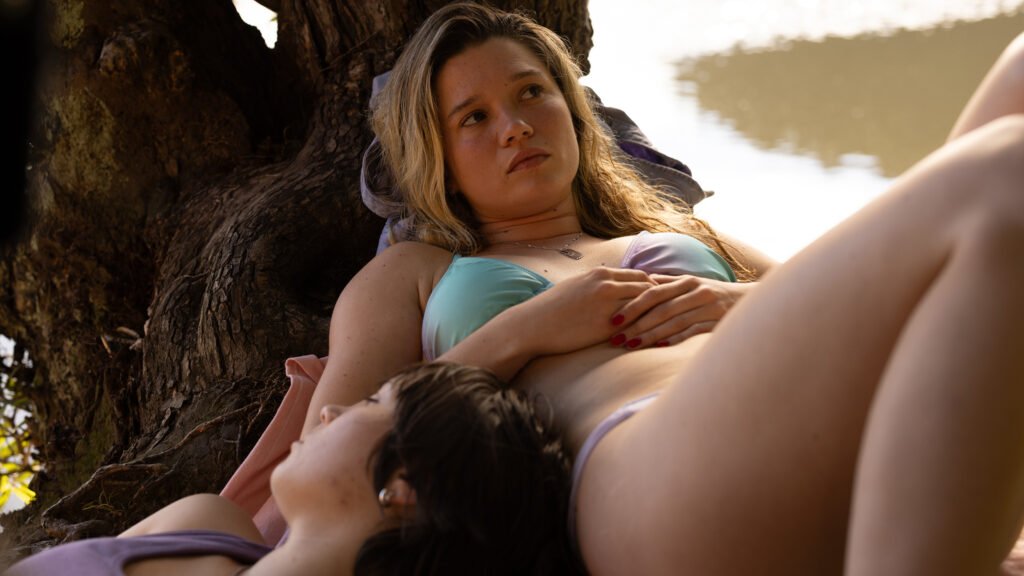
Freya arrives in Sid’s life part coquette, part mother-surrogate. She reads Sid’s report card and is the first person to look at Sid as though she actually sees something, and that intensity of recognition is the film’s emotional core. But Schneideman is equally interested in displaying the conditions that make recognition necessary in the first place—and here, the film’s class consciousness quietly takes over. Sid’s interest in gaining access to older, cooler, and better-off social groups is foregrounded by her desire to spend time with Lana (it’s hard not to think of Chloë Sevigny’s character Lana in Kimberly Peirce’s similarly titled 1999 film, Boys Don’t Cry). Upon learning that her father’s labour serves wealthier families, it becomes equally about Sid’s ability to borrow her own sense of “belonging” in spaces not built for her. The username, then, isn’t just a queer metaphor—it’s the latest version of a tool she’s learned to get her foot in the door. Identity and class mobility turn out to be the same problem.
Things culminate in a personal lesson that recalls, in its staging, a beach sequence in Molly Manning Walker‘s How to Have Sex, which questions whether intimacy is something that happens to a body rather than with it. The reward for posing comes only at the price of sincerity, and perhaps that price is too high. Still, the film has a powerful impulse toward explanation, pardon, and understanding, as if to suggest that everyone, at every stage or level, is faking it to some degree. Everyone gets accounted for: knowledge of a drug-induced state introduces retrospective closure to an intimate event, the popular girls are revealed as insecure and inexperienced, and the warmth of Sid’s home is quietly reframed once the film shows us the other houses.
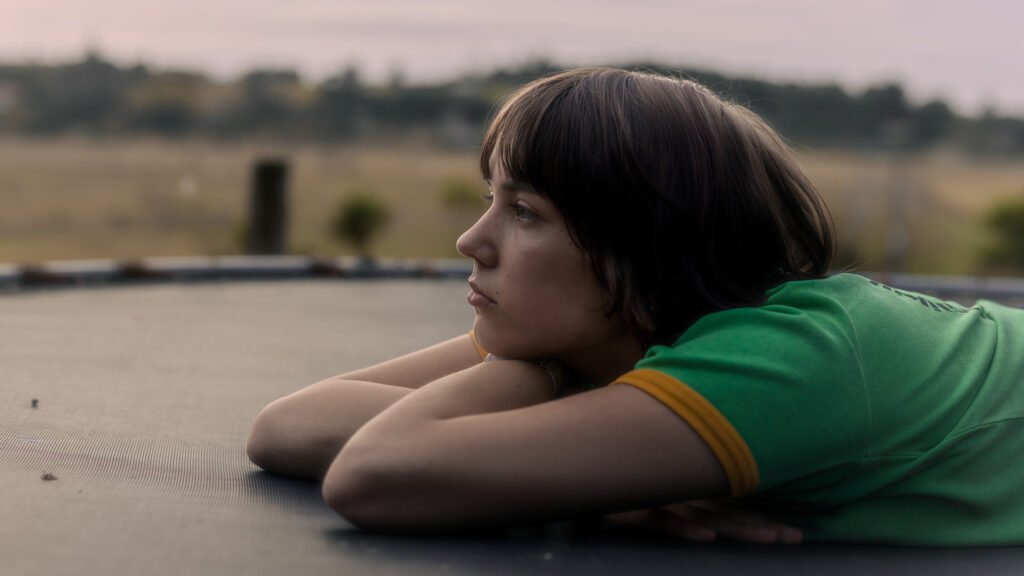
None of this comes as a surprise when, in interviews, Schneideman says the desire to make this film stemmed from a wish to make a film for her younger self. The retrospective gaze remains composed and resolutely level-headed throughout the work. The film isn’t interested in the revelatory aspect of identity—it doesn’t circle around sexuality, desire, and preference as uncertainties, but instead embraces them as a starting point, for those who already know they are queer. It sits beside Aftersun in reframing the past and loss in a more rational, removed, and arguably therapeutic form, lending itself the latest addition of wholesome coming-of-age queer cinema that refuses to sentimentalise the confusion it depicts. Whereas in Luca Guadagnino‘s Call Me By Your Name—a film that would not don the subcategory of wholesome, and where desire germinated and bloomed wildly, unbearably, and vulnerably— Schneideman opts for overt reconnaissance with the past. This makes the film smarter than the teenager at its centre, ultimately offering the film itself as a companion to a future generation of curious cats. In its final scene, with two feet firm on the ground, the message is clear: this too must happen. These are the tropes of discovery, and Schneideman leaves little room to resist their neatness.
*****
Big Girls Don’t Cry screens next at South by Southwest (SXSW, 12–18 March 2026) and BFI Flare: London LGBTQIA+ Film Festival (18–29 March 2026).


