

This year, BFI Flare: London LGBTQIA+ Film Festival (also simply known as “Flare”)celebrates its 40th edition between 18–29 March 2026, hosted at the BFI (British Film Institute) Southbank cinema, which transforms into a lively home for the festival during its 10+ days of screenings and events.
For the March instalment of our CURATOR TALKS series, Purple Hour had a chance to sit down with Diana Cipriano, a programmer at BFI Flare, to chat about the festival’s approach to programming queer cinema and hosting it as an event created to, first and foremost, celebrate queer community as a first priority.
*****
Purple Hour: You’ve worked in different capacities for both BFI’s main London Film Festival (LFF) as well as BFI Flare. Could you explain the differences in approach when it comes to programming for each festival?
Diana Cipriano: I used to be a full-time programmer for both festivals, and now I’ve moved teams a bit. I programme full-time for Flare, but for LFF, I have more of an advisory capacity. I would say that the main difference between the two is that, even aside from the festival, we want to reach as large of an audience as possible. This festival is something for the community. This is a festival for a specific community, and we want to highlight stories that are relevant for that community. Flare is also self-contained at BFI Southbank. When we were thinking about the festival as a whole, both in the films and the kind of events and everything that’s around the festival, we want to make the BFI Southbank this safe, happy place. It transforms even the building that the festival takes place in.
Aside from this, in LFF, there’s a core programme team and a wider selection committee. In Flare, it’s me, Jaye Hudson, Zorian Clayton, Darren Jones, Grace Barber-Plentie, and Wema Mumma. The six of us meet weekly from late October. Every week, we’re watching films and discussing them as we go along. We have some people who do some extra viewing, but the core viewing and core discussion is amongst all of us. As the programme starts to take shape, we see where we have gaps, and maybe when we have two similar films, what does one do in terms of our broader programme that the other maybe doesn’t do as well? When does it represent a pocket of the community that we have overlooked in the past, or is not as well represented as others? Maybe it comes from a cultural background that we don’t have as much in the programme or an area of the world. Then we have some difficult decisions to make. After the holidays, when January comes back around, we’re fighting for the last few spots of the programme.
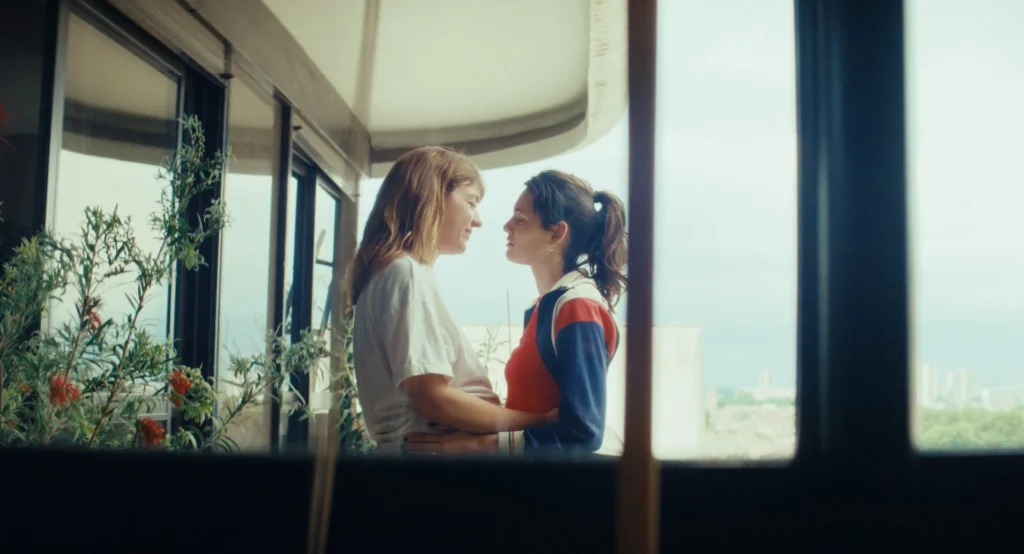 Alice Douard’s Love Letters (2025)
From a curation perspective, how does Flare think about the queer or LGBTQIA+ umbrella?
A significant part of the films that we see for the festival come to us via submission. In our submission forms, we have a checkbox of what areas or letters of the acronym, let’s say, the film relates to. Very often, a filmmaker will just put “queer” because they don’t want to be more specific—which is completely fair. With us, when we’re programming, our thinking is always with the audience. We don’t, for example, have any kind of labels on our website or our print materials saying like, “This is gay, this is lesbian, this is bi.” It doesn’t feel right for us to be putting that on a film, and also because it’s so much of what the audience takes from it. We don’t want to limit or put films in different lanes. In terms of internally for our programming, if we have a film that is kind of queer, or has a lot of lesbian characters or has a lot of lesbian focus that’s stronger than other aspects of queerness, we may take that into account when we’re putting it next to other films, or when we’re looking at the broader scope of the programme in terms of what pockets of the community are represented. But it’s never black-and-white or square plots that we put them in.
We don’t have the same thing year on year either. We don’t have something like, “we need to have this many films that represent the trans community.” In some years we have [greater or fewer of certain themes], and this happens also for genre, for everything. We may have a wealth of films with a block of the community in terms of short films, but then maybe not as represented in features. We also try to balance things out. A few years ago, asexuality was not very well represented, but we did have a talk around it. We try to make sure that everything is represented but not in a closed or structured way.
Have there been trends or areas of focus in certain stories over the years—whether it be style, genre, or characters?
Definitely. There’s been more and more trans fiction being made, and it’s really encouraging to see. Speaking of genre, we have a film from Alice Maio Mackay, whose a filmmaker from Australia who makes incredible things. We’re vey happy to have her new film, The Serpent’s Skin. Every year, there are these little trends. In this last two or three years, there have been a lot of films about parenting and queer parenting—or the process that goes into conceiving, if you’re two cis mothers, for instance. This year we have a film called Love Letters by Alice Douard about two lesbian mothers navigating all of the legal hurdles. We’ve seen different structures of families, even thinking of something like last year’s opening night film, The Wedding Banquet, but we’ve also seen this in smaller documentaries. We also have a film that flips the script on cis actors doing trans characters, where we have a trans actress playing a cis woman who’s pregnant. It’s quite nice to see these kinds of things bubbling up.
This year, a big theme we also have is religion. We have Hunky Jesus, about the Sisters of Perpetual Indulgence, as our opening night film. We have an incredibly archival title that’s a hidden treasure out of Japan from the 1950s called Impure Nuns, about two nuns who fall in love at a boarding school. With regards to genre, last year we had a horror shorts programme, and this year we have two really great horror films, The Serpent’s Skin, which I mentioned, and also Don’t Come Out by Victoria Linares Villegas. We’ve shown her work before, and we’re really happy to see her go into the genre area.
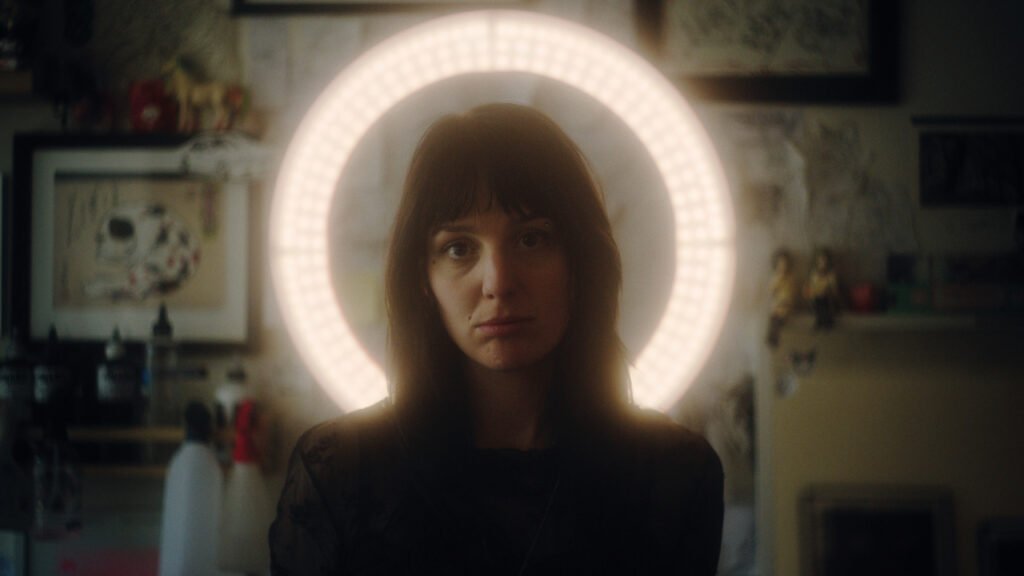 Alice Maio Mackay’s The Serpent’s Skin (2025)
How does BFI Flare set itself apart from LFF and other festivals in London and the UK when it comes to the community aspect that you mentioned earlier?
I’ve worked for Flare since 2018, and I’ve only been on the programming team since 2024, but I’ve seen the ways the festival has constantly been improving on including more and more of the wider community. Every year, we work toward hoping to have some representation for all the letters of the acronym, so to speak. When I started working, it was the first year that it was “LGBTQ+”. It used to be “LGBT”, then a few years ago, it became “LGBTQI+”. Even in the actual name of the festival, there’s been a real effort to be as inclusive as possible to the community. Within the programming community, we all have very different experiences. We have two trans programmers, and I come from a different country that’s not the UK. We have someone from Kenya. We have a team that is as varied as we want reflected onscreen and in our audiences. I think doing that work is quite important.
*****
BFI Flare: London LGBTQIA+ Film Festival runs between 18–29 March 2026 at BFI Southbank for its 40th anniversary edition. Tickets and more information can be found on the BFI Flare website.
Watch the trailer for the 40th edition here:


