

Life is no thoroughfare—rather, a series of meandering roads and pseudo-destinations. Céline Carridroit and Aline Suter‘s debut feature Summer Drift (2026, Virages) understands this [read our review of the film here], placing Johanna (Johanna Schopfer), motorbike-horologist by day, Volkswagen Beetle tinkerer by evening, at the centre of its curt 89-minute runtime. Playful and multi-talented, she moves through the world shielded by a round pink helmet and swaddled in deadpan white lies that seem to contradict the wide-eyed approach to life her spectacles gently amplify. When parts are exchangeable and swappable, Johanna shifts gear, loosening her grip on the pictured past as a blooming summer project full of grunge and grease allows her to slide from the streets of Geneva’s disappearing alternative neighbourhoods onto the drag racetrack in Belgium’s Spa-Francorchamps, where former vicissitudes feel inconsequential in the face of unforeseen victories.
During the bustling 79th Cannes Film Festival, Purple Hour had the chance to speak with the two directors in a cosy corner of the Croisette about the fading Geneva they know, the process of writing and working with Johanna, and filming a live VW race.
*****
Purple Hour: You met Johanna 10 years ago, and I read somewhere that it took four summers to shoot. I was wondering if you could talk a bit more about the process of both writing and filming.
Aline Suter: We wanted to make this film with Johanna because of what she told us about her story. When we first met her, we did a big recording, like a one-hour audio recording. That was really amazing for us because we learned a lot about her life during this recording. We also discovered that she had her very own way to tell stories. When she says something, you immediately picture it in your head. It’s very cinematographic, and everything was surprising. She’s never where you think she would be, or should be, or could be. That was how it started. We asked her if she would like to go on this adventure with us, but she declined. She had been transitioning shortly before, and she was really afraid that she would never get to find a job and didn’t want to expose herself. She had bad experiences with unemployment and other institutions.
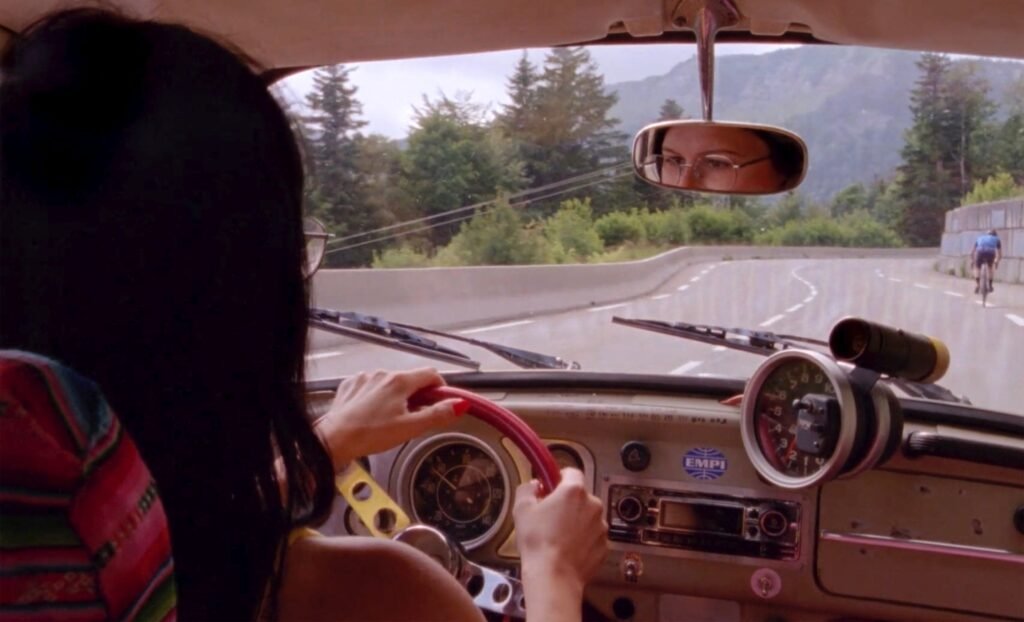
A few years later, she ran into Céline. They met in the street, and she said, “Hey, I found a job. I’d like to make a film.” So, it started with her wanting to do it. At some point, maybe again one year later, she told us about the fact that she had a car that she was repairing. Okay, a car being repaired is interesting, maybe. But she never told us it was this old, incredible vintage Volkswagen Beetle from 1970.
PH: The discovery of this car as an audience member, too—oh my goodness. It’s incredible.
AS: That’s what we experienced, too. Like, wow! But it was normal for her. By chance, we went with her to this garage, and we’re like, “This is your car? This is amazing.” The car had many stories related to her own story. For example, before she transitioned, she was hiding her women’s clothes in the car. One day, she even wanted to run away from Switzerland, and she had hidden clothes. In the end, she didn’t do it, but it was where she could really be herself.
PH: How did you approach working between documentary and fiction?
AS: Five years ago, we started working with Aurélien Marsais, who’s our producer and also a very close friend. We met more often with Johanna, and we started writing what became the film. We started shooting four years ago, which was really between documentary and fiction, because we wanted to shoot in “documentary” places with real people playing their own characters. The year after that, we had a bit more money, and we filmed a bit more.
Céline Carridroit: We have to do [some aspects as] fiction, because there are places or situations we cannot film. For example, like the factory, or something that happened in the past. Then, the fiction begins to come into the film because of what is possible for Johanna. Also, because she’s had to hide some things in her life, and then it goes into a type of fiction to protect herself. The fiction was already there.
AS: Inventing stories is part of her everyday life. As you saw in the factory [scenes], her colleagues keep asking her questions, and she has to invent stuff not to be outed. She invents stories all the time, and it’s a way of protecting herself, but it’s also a tool that she uses. She has joy using it at some points.
CC: It’s her sense of humour, and it’s also a way of seeing life, like playing with everything and not taking everything too seriously. It’s also her saying that some things are difficult, but perhaps don’t take it too seriously. It will be fine.
AS: The film made changes in Johanna’s life, and Johanna’s life made changes in the film. It was really, really interconnected. Each year between shooting, we were writing, depending on what was going on in Johanna’s life and what was going on with the car. Was it working? Was it not? Did it have an engine? How do we integrate this into the story? And so on. We kept doing this until last summer, which was about filming everything that was missing. It was really writing, shooting, rewriting, reshooting.
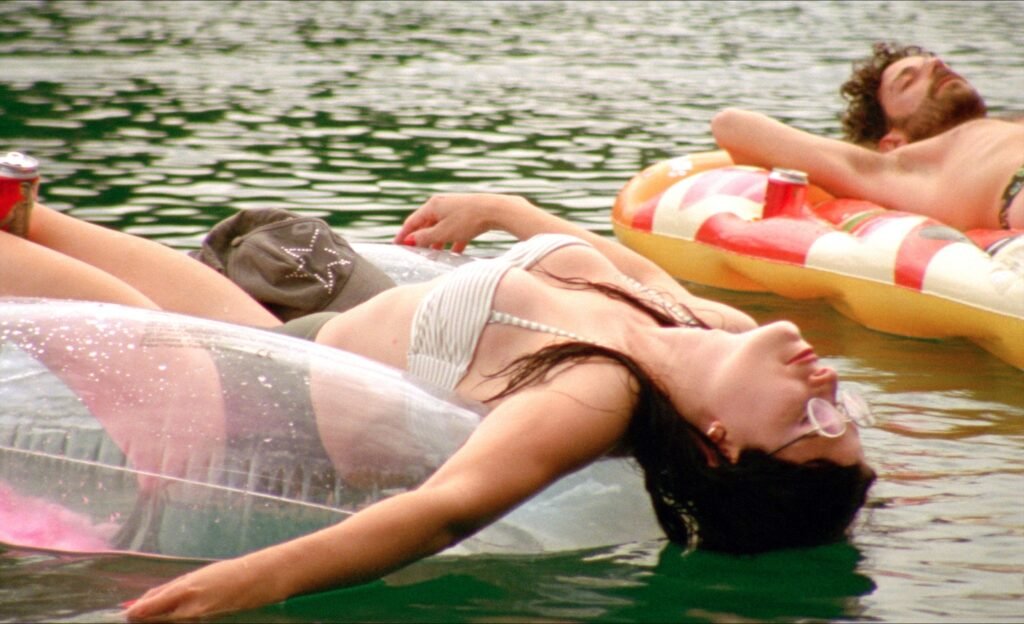
PH: At the end with the rafts, you can see the Pride flag and the Palestinian flag—and then you can see the pirate flag, too, which is really funny. Was there any sort of political statement that you were either trying to stay away from or lean into?
AS: We’ve always wanted the film to be political. When you make films, I think you have to be political. Even the choice to film somebody like Johanna, who’s working-class. That choice is kind of political.
CC: You cannot make a film in this world without [being political]. You are inside of it, and you are saying something about it. The first move of the film is shining a light on her and hearing the voice of someone who’s a working-class woman.
AS: A transgender, lesbian woman.
CC: She’s in a country that’s very, very rich. She has a Colombian mother.
AS: And her mother struggles with her work. Maybe it’s not so obvious in the film, but her mother has pain because she’s also working hard. It’s not something we really [highlighted], but it exists in the film, and that was important for us. People who do this raft race are mostly left-wing people, and we also relate to this. The fact that there were the pirate, Pride, and Palestinian flags in the same frame is something we liked. We didn’t choose to have them, but there was no reason to hide them.
CC: We chose to shoot the raft race as it is historically, in the city, something very important. It was the 26th edition of this race, and it’s called Intersquat [after the group that first organised it], which occupies housing in the city. It was important for us to put Geneva within this history and to remember that it still exists, and it has existed. We wanted to show this. Then, it will not disappear too quickly.
AS: Geneva is really a wealthy place, and you don’t often care or see people who struggle more. There were a lot of people who were struggling during COVID. You saw so many people struggling to feed themselves, and this is not something people know. I’m not saying Johanna belongs to this [group], but still, she works for these really luxury factories. She has to wake up so early. She cannot take holidays when she wants to. She doesn’t have a very high salary, and so on.
CC: The violence of the country comes from this contrast. Like in Mad Max, the poor will become poorer, and the rich will become richer. We live in this world. It’s even more [pronounced] in Switzerland, but it’s everywhere—that’s for sure.
PH: Could you speak a little bit about your depiction of Geneva?
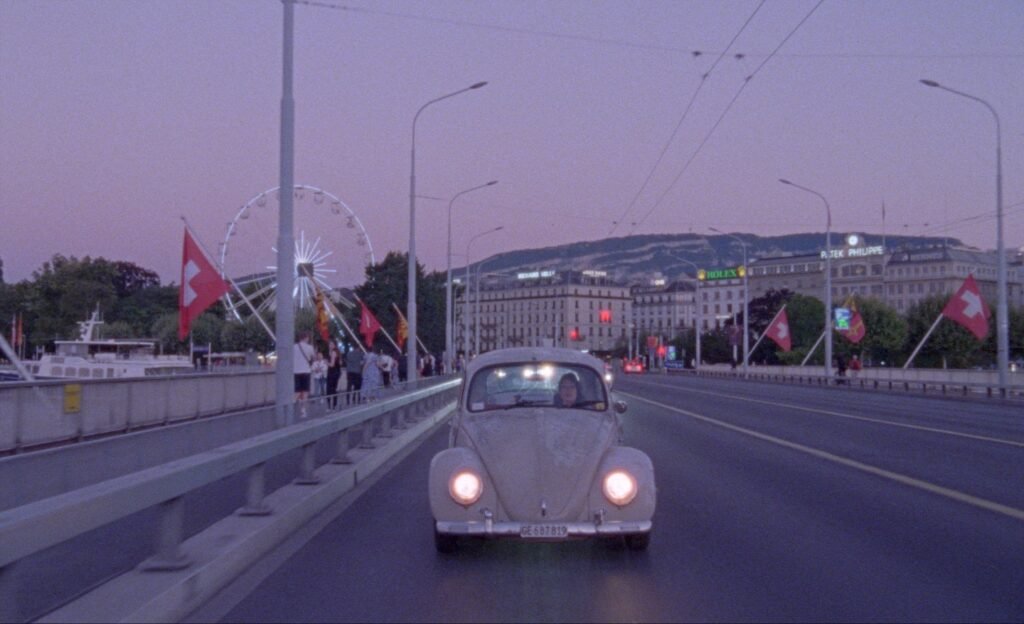
AS: It’s interesting because, of course, it’s a big part of the film. It’s almost 100% shot in Geneva, except for two scenes. The Geneva you see in the film is the one we belong to. It’s the places we know; it’s places where I used to go. We swim in the Rhône every day during the summer. We go to the free, open-air cinema. Céline used to live very close to the fountains [la Fontaine des Tours de Carouge].
CC: This area is where Johanna lives in the film.
AS: This is a place we really love, because it’s people from every social level who go there and have a splash with their children. The city becomes kind of a holiday city. Because this is the Geneva that Johanna belongs to, we wanted to show the different aspects of the city: the watches, the very underground world with punks who live a bit outside of the city in homes they built themselves, and also the very wealthy Geneva that you see in the Mad Max scene.
CC: The alternative part of Geneva is smaller in real life than the proportion it is in our film. It’s our point of view and our everyday life. In Geneva, it’s also difficult to find an apartment. For Johanna, her apartment is not so comfortable. You have to struggle in this jungle, but some places are like an island of freedom, and we know these places now. We try to go there as much as possible.
PH: Is there a large Colombian immigrant community in Geneva? When people think of the city, we usually think of luxury goods, and I wasn’t so familiar with the alternative Geneva until I saw your film.
AS: These are two separate things that come together. Geneva, I think, is one of the places in the world that has more people who are not Swiss than those who have Swiss nationality. This is something I love about the city. There are a lot of people from South America. Johanna, in real life, doesn’t work in the factory you see in the film, but she works for a luxury watch brand. Where she works, most of the people are not Swiss people, and they have bad working conditions—a lot worse than what you see in the film. Geneva is a place where you have these two [sides]: there are a lot of luxury brands, and people who make these brands possible are people who work in bad conditions and are mostly foreigners.
PH: I didn’t know whether a job in a watch factory would be considered a prestigious job, because there’s also the idea of having a background in mechanics, or hobby mechanics, maybe.
AS: The work she does in the film is more prestigious than the one she does in real life, but still, it’s something she has learned to do. It’s work à la chaîne [on an assembly line]: it’s always the same gesture.
CC: It’s also about making the big machine of luxury run smoothly. You are a little piece of this “great” industry. Like the boss says, “Ah, you could have a watch.” In real life, she works in a factory that makes boxes for the watches. You get a gift after 10 or 20 years. But the gift that you get is just the box—an empty box.


