

Founded in 1991, Inside Out Toronto 2SLGBTQ+ Film Festival is now the largest queer film festival in Canada, having now engaged with filmmakers and the community for over three decades. Beyond its weeklong set of screenings during the annual festival, Inside Out also dedicates itself year-round to initiatives designed to support filmmakers and foster the creation of queer cinema through funding opportunities.
Having released its new five-year strategic plan for 2026–2030, Inside Out will celebrate its 36th edition in May and also welcomed Carly Beath as the festival’s new executive director as of 5 January 2026. Beath has previously held leadership positions at the Canadian Film Centre as director of development, Hot Docs (North America’s largest documentary festival), and Interactive Ontario. Purple Hour had the opportunity to speak with her to learn more about her perspective on the festival, its driving forces, and objectives moving forward.
*****
Purple Hour: I’d love to start by learning about how you’ve related to the festival in the past as someone in the Canadian cultural sector and how you’re looking to bring that experience into Inside Out.
Carly Beath: I’ve been a fan of the festival for a long time, so this really is such an exciting role to take on. I’ve been an audience member and seen great work that the festival does. This year will be our 36th year, so we have a long history, and it’s done a really amazing job of bringing films and filmmakers together. In more recent years, the festival has actually supported queer film from the development and production stage through mentorship and through financing, our International Finance Forum and our RE:Focus Fund. Going forward, I would really like to see us continue to expand that work. When we started the International Finance Forum 10 years ago, it was the first of its kind. We see the interest, the demand, and the quality of the applications increase year over year, so we can see that there’s really a need for it. Part of what we want to do going forward, and we speak to this in our strategic plan, is to really evolve and cement some of those industry opportunities to support filmmakers, always with our mandate in mind of connecting filmmakers and audiences with queer film.
One of the three pillars of the five-year strategic plan is “Programming Excellence”, in which it states a goal to “develop and implement a communications framework that provides transparency as to the Festival’s programming values and selection rationale”. Can you elaborate more on what you are hoping to foster with these values?
It goes into the transparency piece that we talk about in the strategic plan as well. It’s about publishing those things, thinking about them, writing down our processes, and then sharing them. This is so you know what our values look like, but they will depend on a conversation with filmmakers, with our audiences, and with our team. Then, what we really want to do is make sure that we have [selection] rationale available to share so there is transparency around why we do the things we choose to do and where our foci are. We’ll have more to come in terms of the specifics, but really it will be about conversations with all of the people who are our community and stakeholders—and what they also want to see out of Inside Out.
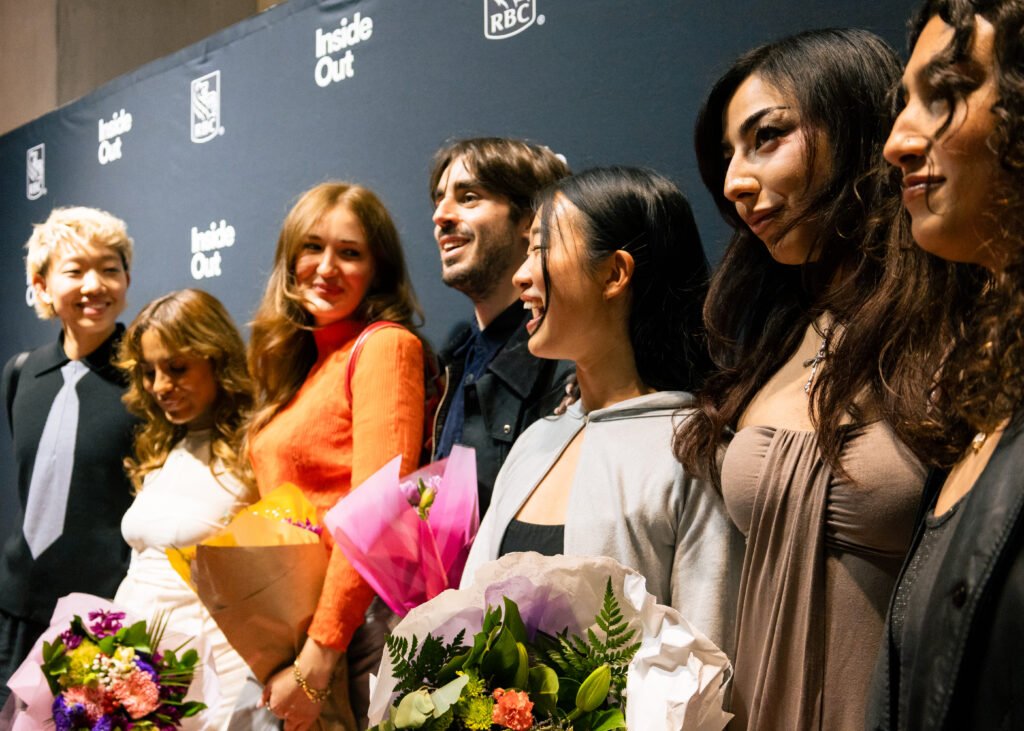 Photo: Laya Mendizabal
How do you see Inside Out in the landscape of queer film festivals as well as other Canadian festivals more broadly?
It’s an interesting time to kind of talk about that, because before I came on board the team, we had to make the decision to hit pause on our Ottawa festival, which we’ve been doing for a while. It wasn’t an easy decision, but it was something we had to do considering available resources and things like that. I think going forward, we want to think about how we engage with other festivals and festivals outside of Toronto. However, in terms of our in-person programming, we’ve intentionally focused that on Toronto in the strategic plan because it’s our home. It’s the most feasible thing for us to do right now, I would say. We love to think about how we reach outside of Toronto online with our digital offerings, and then how we collaborate with other festivals and other organisations to still connect outside of Toronto. With our focus being on Toronto audiences, how do we bring those audiences the most exciting and interesting films we can from across Canada and around the world? We see ourselves in dialogue with other festivals and countries and locations in that way, and then we focus on our Toronto audiences with our in-person programming.
At Purple Hour, we’re looking to examine the scope of what “queer cinema” means. How do you approach these conversations with filmmakers interested in exhibiting at a festival like Inside Out?
In terms of what we consider queer film, it’s a question that’s hard to answer, and I think sometimes it’s on a case-by-case basis. We always want to focus on supporting queer filmmakers and queer stories, but there’s also room to expand. We have a year-round screening series called Run It Back where we look at films from the past. Last week, we screened A League of Their Own, which is maybe not an explicitly queer film, but I think a lot of people see it as a queer film in many ways. There’s always those kinds of conversations to be had. I think scope is personal for each filmmaker. There are people that have very strong feelings about their work, and they can feel the way they want to feel about how their work is categorised.
I hope people start to feel that queer film is for everyone. We want queer folks to see themselves represented and for our festival to speak to community and 2SLGBTQ+ people, but we also want people to come and see experiences that are not like their own. I’m hoping people will be open to that more and more going forward. I feel like every conversation I have nowadays comes back to [the hit Canadian television series] Heated Rivalry, looking at the success of that, and you can see people who don’t identify as queer have become interested in the series. Is there a gateway where people become more open to queer film, even if it’s not personally relatable to them and their own experience? I’m hoping we see more of that.
Is there anything you’re really looking forward to or hoping to see out of the festival and programming?
This is a fun question that we’ve just been talking about as a team. We’re really excited about having more of a year-round presence in Toronto outside of the festival with our screening series, and we’re hoping to partner with other organisations to do different types of events and be present in different ways in the city. We’re really excited about that. In terms of the festival, things have shifted so much since 2020 in terms of the film landscape and film festival landscape. In some ways, that’s scary. In other ways, it’s a chance to rethink what you’ve been doing and talk about whether it still works or what you want to do instead. We’ve been having a lot of those conversations. I think we’ll have a big focus on creating space for community around film. Obviously, there will always be a huge focus on the films themselves. We want to bring really great storytelling to people, but then how do we kind of amp up the excitement and the atmosphere and make it more of something I keep calling “festival magic”. How do you create that festival magic rather than just a series of screenings? I think we’re going to be putting a lot of focus on that and making sure we’re a space for people to come together. That’s something the audiences really value—the chance to see their friends and the community and meet filmmakers and get together.
*****
The 36th Inside Out 2SLGBTQ+ Film Festival will occur from 22–31 May 2026. Visit the festival’s website for more information about year-round events, programming, and initiatives.


