

Now celebrating its fourth edition this year, SUNNY BUNNY LGBTQIA+ Film Festival in Kyiv, Ukraine, is the country’s first and only queer film festival. However, SUNNY BUNNY has been running as a sidebar of Molodist – Kyiv International Film Festival, Ukraine’s largest film festival, since 2001. In 2023, the event separated to become its own independent film festival, with the opportunity to craft a unique identity for hungry audiences.
For our April edition of CURATOR TALKS, we spoke with SUNNY BUNNY director Bohdan Zhuk ahead of the 2026 edition of the festival, which runs from 17–24 April. In addition to directing and programming for SUNNY BUNNY, he also serves as a programmer for Molodist.
In this talk, we dive into selecting films suited for the festival’s audience, being an influential presence in the Ukrainian sociopolitical environment, and challenging prevailing views on the status of queer festivals.
*****
Purple Hour: I was very excited to see Faraz Shariat’s Prosecution as the opening film.
Bohdan Zhuk: Usually, we try to find a shorter film for the opening, but I felt that the film has a very important topic to discuss and was the right choice for the festival. My colleagues agreed.
When you say “right choice”, what does that mean in the context of the festival? Is it making sure the audience resonates with it, being in dialogue with global events, or something else?
I would say both. Of course, we’re thinking about the people attending the festival and who are coming to the opening in particular. Part of the audience for the opening is diplomats and officials, for instance. It’s also a response to current events in the world. We see this almost everywhere, or at least in many different places: the continuing rise of far-right movements. I haven’t seen any other film that speaks so urgently and engagingly to this and, at the same time, empowering the protagonist. She’s not just a victim. I hope that this is inspiring for the queer people in particular who watch this film. We need to be prepared to stand strong in defence of our beliefs and principles. I think Prosecution is also a good illustration of how we actually need to name things for what they are instead of shying away from this and being very vague, which is common lately.
Festivals have different approaches to examining queer cinema—and what that means to them. Could you describe your approach to SUNNY BUNNY?
It’s a tough question because we can define queer cinema in very different ways. Some films we see about characters who belong to the LGBTQIA+ community, while some films are more queer in form—more experimental, non-linear, something that dares to go against conventions. Some people probably may not call these films queer, but I think it’s an umbrella term. In the case of Prosecution, the protagonist’s queerness is not the focal point of the film at all. I like to see such films where the issue is not coming out or transition or some form of acceptance.
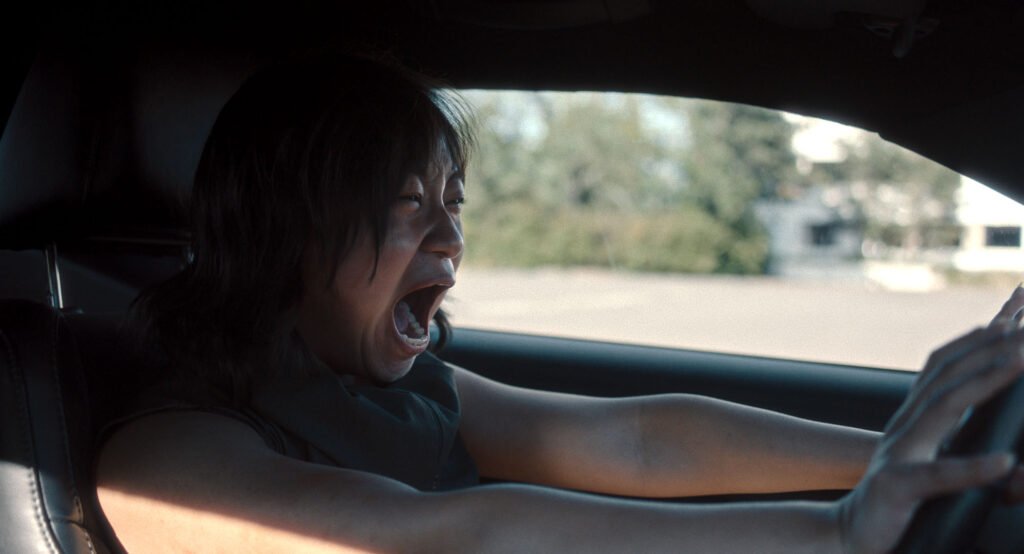 Still from Faraz Shariat’s ‘Prosecution’
What is your timeline for selecting the programme? I see that there are some films that played at Berlin and BFI Flare, but I also see films that premiered earlier, like Fantasy from Locarno and Sarajevo and Maspalomas from San Sebastián.
Our team is basically doing two festivals, Molodist and SUNNY BUNNY, and it’s not exactly the same team, but it’s almost. Even though it’s now a separate event, it’s not like there are no queer films at Molodist. We see what may work better for each festival. When we’re done with SUNNY BUNNY in May, after reporting and getting good sleep and rest, we are very actively doing the selection for Molodist. Beyond what you mentioned, there’s also Ivona Juka‘s Beautiful Evening, Beautiful Day, which is a bit older, and we saw it longer ago. Because Berlinale is so close to SUNNY BUNNY, and it’s such a big festival for queer cinema in particular, we can’t just do the selection beforehand. We want to have as rich and diverse a selection as possible. We try to optimise it in a way that we are almost done with the selection before Berlinale, and then we watch films and request links right after in order to finish the programme.
When you say some films fit better at Molodist and some at SUNNY BUNNY, what is that point of differentiation for you?
Sometimes you watch a film that’s about a queer character or queer story, and you think that this may be a better fit for a more heterosexual audience, because some things may just be too familiar or less interesting for the queers. Obviously, SUNNY BUNNY and Molodist are festivals where different kinds of viewers come, but the core of the SUNNY BUNNY audience is queer. We think that some films work better for an audience that isn’t part of the community, or sometimes you watch a film and there’s a twist that makes it queer. I’m just thinking of one film that I saw at Berlinale—I won’t say it as it’s a spoiler. But if we put it in SUNNY BUNNY, the audience expects that it will be something queer or there will be some expectation of a development in the story.
SUNNY BUNNY is in its fourth year as an independent festival. What does your audience and demographic look like, especially as the festival has grown and become more internationally recognised?
I would say the audience has changed since SUNNY BUNNY was part of Molodist compared to now as its own festival. The war itself is definitely a factor—it clearly affected everything, but in particular, movie-going. Some people would not go at all to the cinema during this time, at least in the first couple of years. We don’t have specific statistics, so I can just say this from the passes we sell and seeing the audiences at the festival. But I would say that the majority of the audience is up to 40, and compared to SUNNY BUNNY when it was a part of Molodist, the audience is even younger than before, and maybe more diverse. SUNNY BUNNY when it was part of Molodist was smaller, with just 10 to 12 films in competition and something out of competition. Part of the reason why SUNNY BUNNY was separated was that we wanted to show more films and felt that there is an audience for it here.
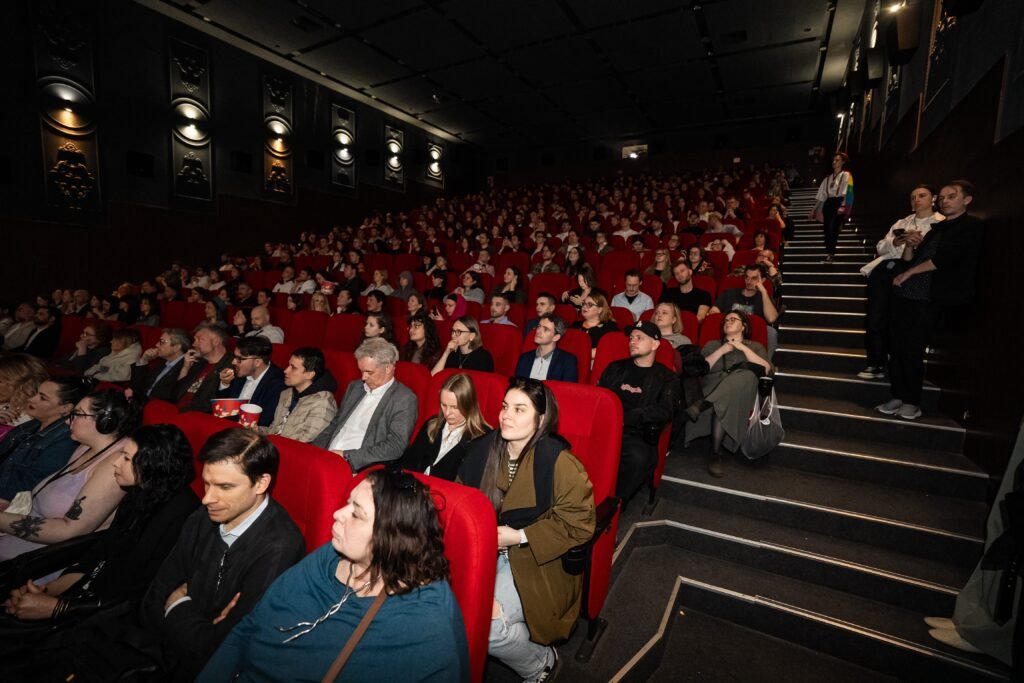 Photo credit: SUNNY BUNNY
Especially with the festival becoming a standalone event, what are your intentions behind the community aspect of SUNNY BUNNY? Some festivals prefer to foster a sort of community-centric environment specifically for queer people, while other festivals place an emphasis on making it as widely accessible as possible for everyone.
I feel like we’re trying to create a balance between the two. We want it to be for the wider audience as well, not just the queer community. To me, it’s a way to also reclaim our presence and space in society by bringing this audience [to the festival]. I also feel that queer films are very often the best films I watch. Queer cinema is very influential in terms of filmmaking currently. I feel like we can reclaim this visibility by saying that this is a great film, and it just happens to be queer or was made by a queer filmmaker.
SUNNY BUNNY is the only queer film festival in Ukraine right now. I hope that at some point there will be more festivals, or maybe we’ll help with that somehow—let’s see in the future. This is definitely a very important festival for the community, and we’re trying to also make it a comfortable space for the community as much as we can. We try to react to what they have to say—sometimes they don’t like some things, and sometimes they do. It’s about hearing the audience and hopefully having them engaged, because we also do different industry and educational events, lectures, panels, and so on.
Many queer film festivals engage with the external sociopolitical environment in one way or another, either as a necessity—for funding, or because of pushback—or for advocacy purposes. How does SUNNY BUNNY fit into the Ukrainian landscape?
We try to reflect what the community is talking about at this moment. We are always trying to react to what’s happening with the government, such as the bills that are currently under consideration. Something we’ve been talking about since the first year of SUNNY BUNNY as a festival is registered partnerships for couples of the same gender, which is still not approved in Ukraine. That’s been taking much longer than it should. Right now, there’s a new civil code being considered in the parliament, which hasn’t been approved yet, but it’s very, very problematic, and it just ignores the existence of queer people. There is no mention at all. It’s just mentioned that marriage is between a man and a woman. We’re trying to react to this as well and hopefully somehow help the movement against this bill in particular. We’re also just trying to voice what the community actually needs: equal rights, which we don’t have. This is definitely a very political festival, and we don’t shy away from that. We are trying to make a difference, broadly speaking, because we’re so visible in Ukrainian society. That’s definitely a big responsibility. We also consult different organisations in lobbying, human rights, and peace—doing our best to make the festival as relevant as we can.
What is your approach to programming Ukrainian titles? For me, one memorable film was the documentary Queens of Joy, about drag queens in Kyiv, which I know opened the festival last year.
In general, we want to show as many queer Ukrainian films as possible without sacrificing quality. Obviously, we’re not selecting everything we can. We try to show the breadth of what queer Ukrainian cinema is right now. We also think about if and how they are talking about something more political or engaging with these topics. Queens of Joy is a good example of that—it’s just a good film about three queer people in Ukraine, but it’s also about more than that, the intersection of human rights and queer people. What also matters to us is when other queer film festivals in the world follow our selection and pay attention to Ukrainian films. We’re also collaborating with different festivals around the world doing curated Ukrainian queer film screenings. We’ve done that quite a few times to promote Ukrainian films and give them a bit more visibility. We have one annual collaboration with Mezipatra Queer Film Festival in the Czech Republic, in addition to others.
Another thing we do is short film project pitches, which we are doing for the third time. Obviously, it’s tough to make films in Ukraine, right now and in general. When it comes to queer films, it’s probably even tougher—not that there’s so much prejudice, but there are very few resources or funding available in Ukraine and from the government. The prize is small, but we try to make a contribution. The previous winner was able to make nearly the whole film with this money.


