

In Bouchra, the titular character is a New York-based filmmaker, like directors Orian Barki and Meriem Bennani themselves. Inspired in part by conversations between the Moroccan-born Bennani and her mother, who lives in Casablanca, this animated film moves through Bouchra’s life in a kaleidoscopic combination of fiction and documentary. The confluence of the two is crucial to the work’s storytelling as Bouchra (voiced by Bennani) tries to talk to her mother about her sexuality, a topic the latter has avoided for many years, while friends, exes, and new potential partners both complicate and help her understand her emotions.
In the framework of the 2026 edition of IndieLisboa, we spoke with Barki and Bennani to unpack this multifaceted work—beyond the animals.
*****
Purple Hour: How did the other mediums and styles you work in influence how you collaborated together on Bouchra?
Orian Barki (OB): I come from documentary practice, and Meriem comes from art and video installation. In our first collaboration, which was a series called 2 Lizards, we already discovered something about our backgrounds together. Working with the material, I really think that we were able to play with documentary scenes and dialogue with animation while thinking about visual expression and form. It creates this beautiful thing that is interesting and brings something to this story that is more creative. I remember that when we made 2 Lizards, at first, we thought it was just going to be videos of us talking about our lives. Then we thought, oh my God, it would be so annoying to have these two artists just filming themselves and talking about what’s happening in the first part of the pandemic. But taking it into animation and adding that layer, it’s something everyone can relate to, but it scratches at something. It opens it up to something more surreal and more interesting visually. Bouchra is our second collaboration, and we just leaned into exactly how we wanted to approach this, especially as it’s a personal story for Meriem.
Docufiction seems to be becoming more popular, or perhaps more visible amongst audiences, especially those with a personal story or a meta angle. How do you make decisions about what to commit to screen, what to change, and what to leave for yourself?
Meriem Bennani (MB): I wouldn’t say docufiction is trendy. I think people were doing this kind of thing in cinema that is more experimental. Then there’s something now about how accessible filming is, and also how everyone is documenting everything about their lives because of social media. One thing we have to think about is that sometimes films are being made more about the genre, rather than being in the genre when you make things a certain way. Something about the collaboration that led us to understand the documentary form, or the non-fiction form, while also loving the fiction form, and then taking pieces of what we like from both. In a very personal story like Bouchra, it actually started first as a fiction film. It’s only later that we added in the conversations I had with my mom. We understood that it would be better than anything we had written, because it was true.
OB: The specificity, too.
MB: Yes, the specificity in the way she answers. We had written dialogue, but because I voice Bouchra, and Orian voices Yanni, Bouchra’s best friend, it allowed us to play with improvisation. That’s something we liked to do in general to have this more conversational speaking rhythm.
OB: Bouchra, compared to your other films, it’s the film that’s the most rounded. It still feels really playful, but it’s soulful. You’re always staying on her, and you’re always watching her, and it feels like you’re getting into an otherworldly place.
Could you expand on how the film looked in its earliest fiction-forward iterations?
OB: The film that we wrote is the film that she is making in the movie. The mother element was created for us to bring the documentary into a story that’s very true to how it happened in real life. In the film’s first scene, she’s calling her mom and saying, “You always do that, but I have to talk to you.” That’s sort of the inciting incident, of sorts—I haven’t broken up the film in that way—but that’s the motivation of the film, as Bouchra is a filmmaker and she’s trying to make a film. In order to do that, she has to do something that she hasn’t done in nine years, which is have this conversation with her mom. The film actually does have a pretty defined structure, where the more documentary-like part comes first. But even in the film that she writes, you can find reflections of reality, things that happened. For the fiction part, we actually worked with a third writer, her name is Ayla Mrabet, she’s Meriem’s childhood friend, and we wanted to collaborate with someone who lives in Morocco and has that perspective.
How did you land on this moody, dark colour palette and the particular animation style?
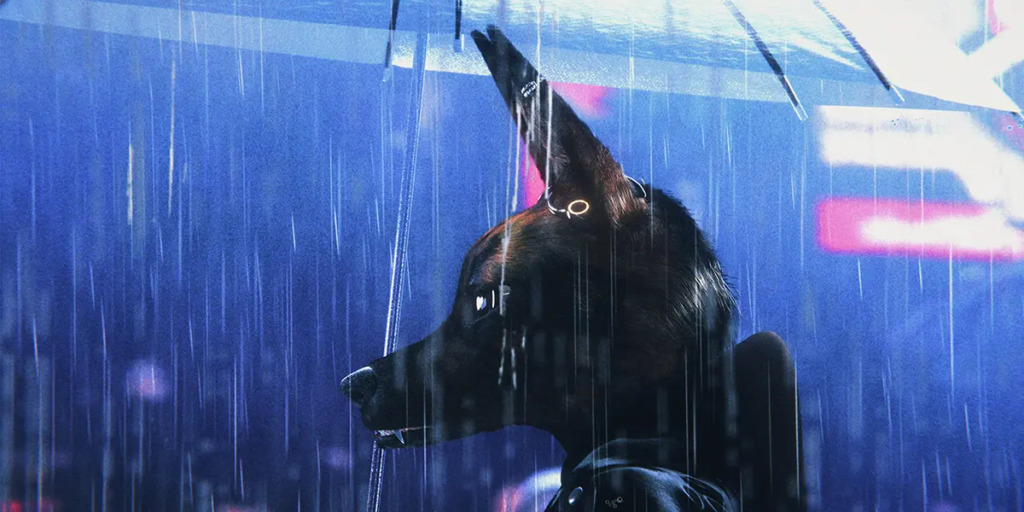
MB: The two people who made the film with us are John Michael Boling and Jason Coombs. This film wouldn’t exist without them. Jason did all of the modeling of the sections, like the animations and putting the scenes together, and then John Michael did the cinematography, textures, and a lot of the look and feel. They definitely brought a lot of the animation perspective into the space, something like that film noir vibe. We also made this film as a dialogue. In terms of images we were interested in, it was that image of the other, and we wanted to explore the potential of image-making and how cinema manages it all.
OB: When we landed on the film noir aesthetic, or were inspired by it, it wasn’t intentional. It wasn’t like we had it on a moodboard, and said we were going to make this film noir type of work. It came through making connections, but then it just stayed. I talked with my friend who was doing a festival, and he said he liked how the style goes with the story, because he watched the beginning and thought, oh my God, is she a detective? It’s not like she’s not really doing detective work, but the way she’s interviewing her mom and asking her mom questions, it does sort of resonate with this. At some point, even her mom says, when she’s calling her, “Oh, I wasn’t ready for this interrogation.” We kind of worked within the world.
I also wanted to add something about the storytelling style, which is that we weren’t trying to avoid conflict, but instead tell a story that wasn’t driven by conflict. We avoided a story that’s propelled by the main character wanting something, and then not getting it, and so on. We wanted to look for another way to make a story that still has tension and captures the audience, but is not only based on this idea of conflict. Again, leaning on the documentary material helped us find a balance and with adding nuance to the story.
As you’ve already brought the film to so many festivals, have there been any conversations with audience members that have brought you to think about or resonate with the film in a different way? For me, the throughline of having someone who did not grow up having the vocabulary to understand their children or family rings true.
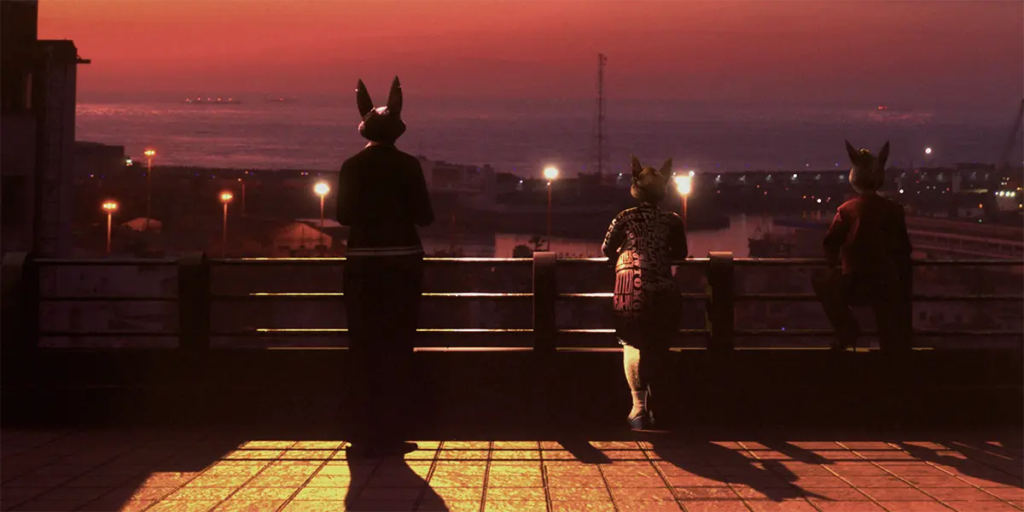
MB: Well, a lot of people have asked us the same thing, which is, why did you choose animals for the film?
OB: Bouchra was at the New York Film Festival, and we live in New York, so a lot of our friends were able to come. A friend saw the film, and she told us that she thought that being loved by one’s family meant being fully understood by them. As she got older, she realised that love doesn’t have to come with that understanding. Sometimes love is just something you have for people, and you’re going to love them regardless.
MB: The film is about being understood by others, but also making the effort to understand them. We have to talk about going both ways.
How do you view the film’s relationship to queer cinema as a concept or umbrella?
MB: I think Bouchra is queer cinema.
OB: Yeah.
MB: But I think it’s important to see this from the point of view of a Moroccan lesbian and not just from an idea or a kind of general, Western hegemonic view. I love queer cinema, but the film is not trying to engage with the discourse. When I think about Bouchra, I think about animation, I think about films I like, and I think about Moroccan cinema.
*****
Watch the trailer for the film here:


