

Czech filmmaker Šimon Holý—a very familiar face to the Karlovy Vary International Film Festival—brings his fourth narrative feature, Chica Checa, to the global stage with a premiere in the festival’s Crystal Globe Competition.
This light-hearted, audience-friendly film follows Zdena (Pavla Tomicová), a widowed middle-aged Czech woman living in the countryside, and her bid to seize the moment after her mother falls gravely ill. Encouraging her along is her son Lukáš (Jan Cina), who lives in France and reveals to Zdena that he is gay and makes a living a drag queen under the titular name, to her initial shock. Equipped with the love for her son, she quickly embraces who he is; his brief visit turns into a dual rediscovery of what they want out of life and their connection with each other.
At Karlovy Vary, we sat down with the Czech filmmaker to understand his socially responsive approach in the film’s style, contending with worsening conditions for queer stories and filmmakers, and finding little hints of magic along the way.
*****
After Lukáš comes out to Zdena, you can see she struggles for a moment with the revelation, but she doesn’t get angry or upset. Do you see this moment between them as as an aspirational sort of situation, especially with an older generation of conservative parents?
Yes, I wanted to be aspirational, but the deeper answer would be that I really didn’t want to make a story of trauma. I didn’t think this was a story of trauma, either. Queer people in Central Europe, as I see it, are pushed into these traumatic and dark stories. So I wanted to create a different kind of story that is very feel-good, very warm, very easy—and it’s not about drama.
I was thinking about the genre of buddy movies from the ‘80s, so Lukáš’ coming-out, in that sense, is not really the topic of the film. It’s just a setup that would be there in a usual US buddy movie, and that’s why they skip through it so fast. She’s more sad about the fact that she didn’t know for so long, and that she maybe failed as a mother in that way. Sometimes saying sorry takes time, and that comes at the end of the film.
It’s more about a love between mother and son and a love of the world. What I was trying to achieve with this film was to use all the possible conventions and tropes we have connected to the queer pop culture world—and twist them. There is a ‘50s melodrama trope, there is a buddy movie thing, there is social realism from Central Europe involved.
I graduated from university with [the release of] a film by Katsuhito Ishii, The Taste of Tea, and I loved that film quite a lot. With that film, the director had this task of thinking about creating a film without drama. Ever since, I was really interested in these kinds of films where we’re not using the usual three-act structure. That was a new quest for me: how to create something that looks very conventional and very open towards the audience, but is still actually going around all these conventions and creating a new path.
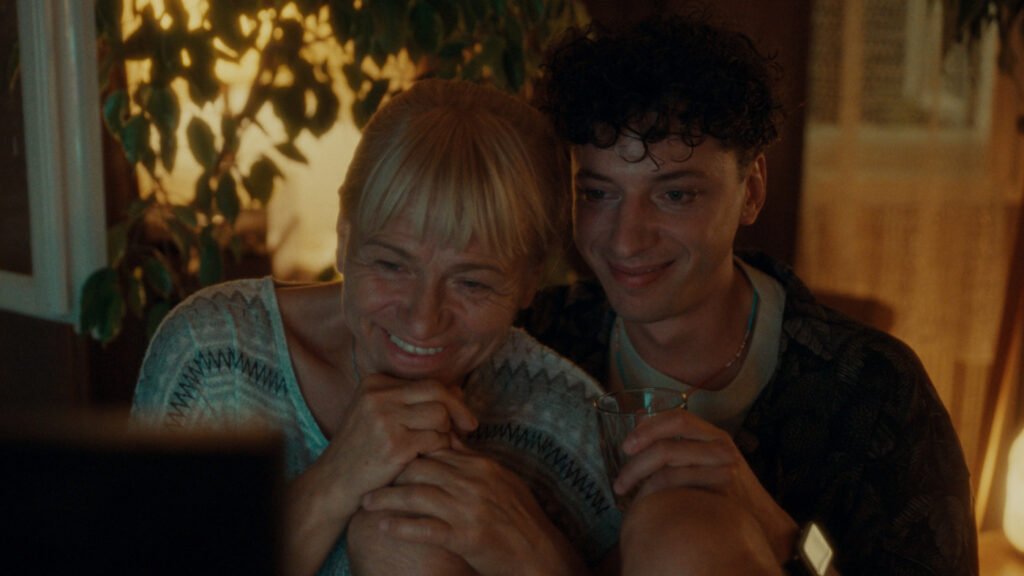
I read that the development of the film took place over many years. Did your approach to the project change over this time, especially given a shifting global environment—socially, politically, and so on?
We started with the film when COVID was starting, and we already felt that the world was moving somewhere we didn’t want it to. We felt there was a need for something positive, because we see that on the festival circuit, films are getting darker in tone. They’re all relevant, but I think there needs to be some hope in these times. That’s the only way we can really tackle problems and see that there is a solution to some struggles.
What I didn’t realise is that the world would be turning worse with each passing year. Now, the film is more relevant than ever. It’s really interesting to see the audience response, because I see that the responses differ, and it’s interesting to see why they differ. Some people feel that it is very relevant, and other people think it’s naïve—and dangerous in its naïvety.
Can you elaborate on these responses? Is this split more generational or demographic, perhaps?
We’ve had a lot of really nice encounters with mothers and sons who came to the screenings, and they’ve been very touched. I’ve seen a lot of queer people also being touched by the film, because they realised there isn’t a queer film in [Czech] cinematography that is like this. There hasn’t been a feel-good queer film in the Czech Republic, ever—this is the first one. They might say, it’s a story we’ve seen before in some ways, but never here and never about us. I think it’s very important to see our existence in this space.
Then you see a lot of non-queer, straight people who are usually older who are totally ignoring these facts. Sometimes I’m shocked by their need for [certain narrative elements]. They’re always criticising that the coming-out is not dramatic enough, or that everything is so easy for these characters. Maybe that says more about them than the film itself. I think there is maybe a need for healing—for everyone.
In our interview with Kukla on her film Fantasy, she shared that instances of queerness and transness in Balkan communities can be accepted—such as in reality television—but in daily life, it’s ostracised. Do you feel that there is a similar phenomenon in the Czech Republic or the region when it comes to acceptance of queerness?
Now we call it drag, but people called it “travesti” in the ‘90s, and it was everywhere in the Czech Republic. Suddenly, we’re making drag this thing that’s “dangerous” to society. It makes no sense. The same goes for queerness—people say the same things. The first season of the Czech version of the show Pop Idol was won by a lesbian in 2004. Our Big Brother-style reality show that was a big success was also won by a gay man. We keep putting queer people in reality TV, and it’s seen as okay, but for some reason, we are scared in real life.
Our public television is becoming more like state television, and we are under attack. The Ministry of Culture explicitly said they don’t want to support queer narratives, queer audiovisual work. They came after another project of mine I’m producing for Czech television, and it’s really odd. It gives me a lot of questions, and I keep wondering whether to stay here or not, or what I should do as a queer person, because it’s exhausting.
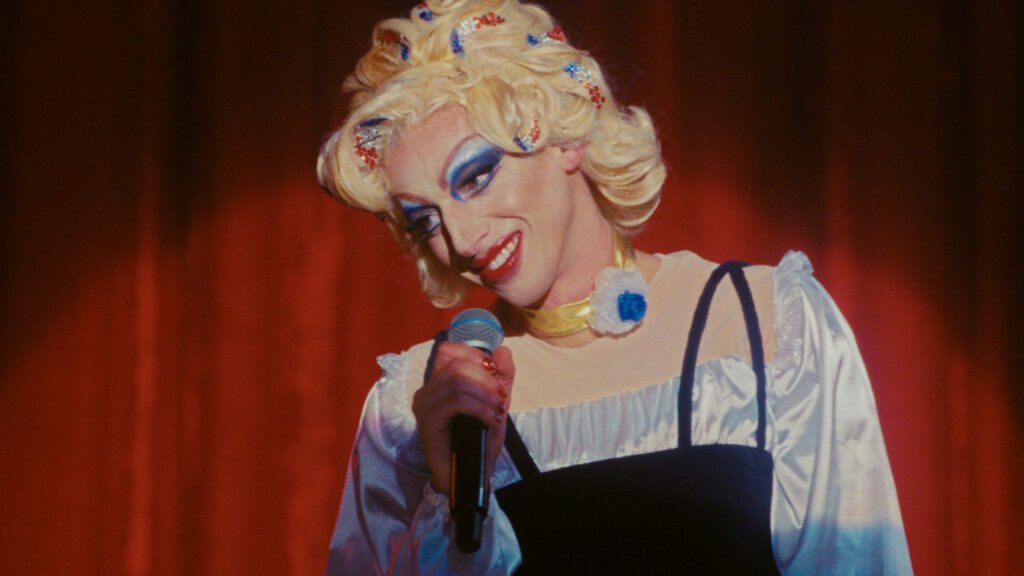
During the shooting process, were there any unexpected moments that ended up being serendipitous in the end?
It took a long time to find the house [that Zdena lives in]. We went through almost, I think, 80 different houses. There was a house I really liked, but it wasn’t the right one. But the owner came, and I thought that he should be Zdena’s late husband. He should be there as the ghost—this is exactly the man I envisioned. So we asked the owner, and we said, “We know you’re not an actor, but would you mind being in two shots, just silent or smiling, because you are perfect for this.” He said yes, and we talked about the house. He told us that he was selling the house because his mom just died. I said, this is basically the story of our film.
We also asked him for photos to put in the house for our set, and he was so nice and gave us some family pictures. On the first day on set, Pavla—the actress for Zdena—came on set and was looking around to get more familiar. She came to me and said, “Šimon, where did you get these pictures? I didn’t give you pictures of my first husband.” It turns out that Pavla’s first husband, who has passed, looks identical to this guy. When they met, Pavla was so shocked. It was very odd, but there was something magical about it.
I also love improvisation, and I like when there are more documentary-style moments. At the funeral party in the film, there was improvisation on [the singer’s] part, and he said that his grandma sang this song to him. Three weekends ago, I went to see a lot of Czech and Czechoslovak films from the ‘60s and ‘80s, and in four films, there was a moment when the same song appeared.
I thought it was so funny that we are continuing the lineage of this song in a film. These films were all about villages and Czech society. It was this folk song I didn’t actually even know, but it’s been with us in the audiovisual sector for 70 years now. I didn’t expect it, but I really liked it.
*****
Watch the trailer for the film here:


