

Angelica Ruffier’s La belle année has already proven itself to be one of the year’s most interesting autofictional works (read our review of the film here), in which the Swedish–French filmmaker blends documentary moments with more fictional—or perhaps lovingly reconstructed—scenes of herself on her own. But perhaps simply a documentary label is just as apt in its dedication to a certain truth and story, let alone trying to pick at its veracity. The film has an impulse toward stretching back and forth through time to get at emotions committed to 16-year-old Angelica’s journals, which describe her passion for her history teacher, Miss Bresson (aka Sylvie).
The film made its world premiere in the Tiger Competition at this year’s International Film Festival Rotterdam (IFFR)—where it also picked up a Special Jury Award—travelling around the festival circuit since January. Now, the film makes its Spanish premiere at the 74th San Sebastián International Film Festival in the competitive Tabakalera-Zabaltegi section, a strand dedicated to audiovisual work across any length or style, including pieces for screen and installation.
At San Sebastián, we sat down with Ruffier to discuss a broad range of topics: approaches to making yourself a character in documentary work, the project’s emotional roots, extensive connections with other works of queer cinema (Daughters of Darkness (1971), Dreams (2025), and Carol (2015), among others), and death as an entry point into a new way of seeing.
*****
When I was watching, I was thinking about how languages in the film seem to play to different emotions. It starts in French, but then you speak Swedish when you’re cleaning out the house with your brother. I’m curious whether you feel like there’s a draw toward certain languages in certain moments of your life and how this also impacts the film.
It’s playing on different levels and exposes this very common thing today: the bilingual dynamics that you can have with people and that I have with my brother. We feel a kind of familiarity in passing from one language to another. There are some words that have a heavier feeling in some languages, and that’s why we use them directly. I grew up in France, and this 16-year-old young woman grew up in France. She read in French. She experienced love and desire in French. From my now Swedish point of view, because I’ve been living there for 10 years now, reading her work, there was a kind of expressivity, or things were, as we say, loaded. It’s not to say things were actually expressed in a more passionate way than we express things in Swedish now. They just became [clearer] to me.
What about the vocabulary that you were reading from your 16-year-old self?
It’s a teen who is trying to be very adult in her way of being, and also by imitating styles of literature that she’s read. She’s reading Simone de Beauvoir, and she’s reading [Charles] Baudelaire. Sometimes, it takes the shape of that language.
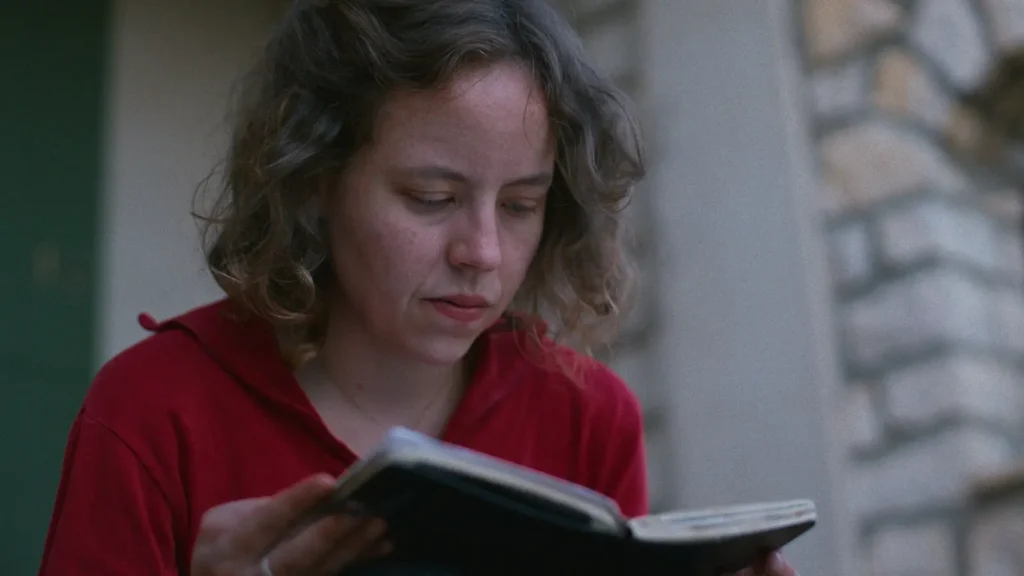
Obviously, you’re referring to her, as this character. I have a question about subject and subjectivity, as separating the pronoun in this way gives a certain sense to 16-year-old Angelica as someone else entirely. I spoke with Myrid Carten about her film, A Want in Her, where she talked about referring to herself, in the editing room, solely by her initials because of the way she felt it necessary to separate herself from her onscreen character. I found that very interesting. Did you also have certain strategies or approaches to creating a separation?
In the editing room, we said, “Angelica is doing this,” and so on, in this way. I was editing with my editor Anna Eborn, and we were always sitting together. We really birthed the character of Angelica. We didn’t really have a strategy, but it didn’t get so messy, strangely enough, because I had to go seamlessly from being in the situation to being responsible for the team and the work. I cannot really explain how. When I met Sylvie, for example, it was very clear because we went there all together, and then we said, “Well, I cannot step out of this encounter, so you have to just take a decision. We’ll keep shooting, and you won’t stop it.” We went on for the whole day, and we came back the next day and redid it for the sake of images—but that did not work out well.
So, you stuck with the original encounter.
Yeah. But we tried it such that I would get more decisional power over the image.
I find the imagery and cinematography interesting because there seem to be so many documentaries today that, when directed by the main protagonist of the film, typically adopt a more traditional first-person subjectivity, sometimes by holding the camera, for instance. What was your approach to switching between being in front and behind the camera?
We were always shooting long sequences. When there is a documentary scene, we were shooting between 20 and 30 minutes. And we shot on digital, thank god. Then, either Simon [Averin Markström, the film’s DoP]says he needs to do something, or I will call a break because everybody needs a break.
You did an interview for the International Documentary Association (IDA) Magazine that I read, and I’m curious if you could expand on it or if you still resonate with it. You said, “Everything feels much faster now, especially in relation to queerness and love.”
Wow, what did I mean?
Sorry for putting you on the spot and quoting the past version of you! The idea that queerness is “faster” today was just very interesting to me.
I don’t remember this, or I hadn’t read it. I mean, if you live in a village or if you live like where I grew up, it can take many years before you could get a sense of what your feelings were, or if you had other people that you could find who were maybe experiencing the same thing, or if you could see something on television. Maybe it was in relation to that—that you have social media, and then there is like a way of making community, which goes a bit faster.
Especially with this retrospective gaze, do you see the story as a sort of queer (re)discovery in any way?
It’s definitely a story about queer discovery. I would say it’s not really a rediscovery because I had many years to think about this. [laughs] But the rediscovery would maybe be that, when I read my writing, I still had a sense of shame. The film is a lot about untangling that shame, and I think the shame is about forbiddenness—not that it’s a woman, but someone who’s older and a teacher. I was in Finland and met a festival director who was writing an article about gerontophilia. I was like, “That’s so Finnish to call it this!” It was about entangling those kinds of feelings.
As a hypothetical, do you think the same would apply if it were an older man, especially in the environment you grew up in?
First of all, I would not have made this movie if it were because I don’t think it necessarily plays out in the same way. But of course, this process of identification with her as a woman, as a teacher—somehow, it drove me into a sense of shame. Could she be my mother, my friend, my lover? Nowadays, I don’t know. It’s just a feeling. I feel that she never took advantage of it and did nothing in response. She saw that feeling, but she treated it in a way that I respect a lot.
This reminds me a lot of Dag Johan Haugerud’s Golden Bear winner Dreams (2025).
I saw it a week ago!
There’s that conversation later in the film between the mother and the teacher when they meet in the café. That monologue by the mother, to me, is so powerful.
I thought a lot about this. I was so surprised that the teacher was in such a negation. She feels like such a progressive character and a woman, and when she meets the mother, she’s so afraid of having crossed any kind of line, so she’s like, “No, no, no, no, no.” She’s denying everything. She’s so afraid that the mother will be there to nail her, but then the mother defends her daughter.
Exactly—the mother says she doesn’t believe that the teacher didn’t feel anything, or that she didn’t understand what was happening.
It’s so interesting that she also reverses course. She’s very upset in the beginning. I didn’t integrate that aspect at all, even though my mum knew about this. She found the book [I wrote]. She was like, “People should not see this.”
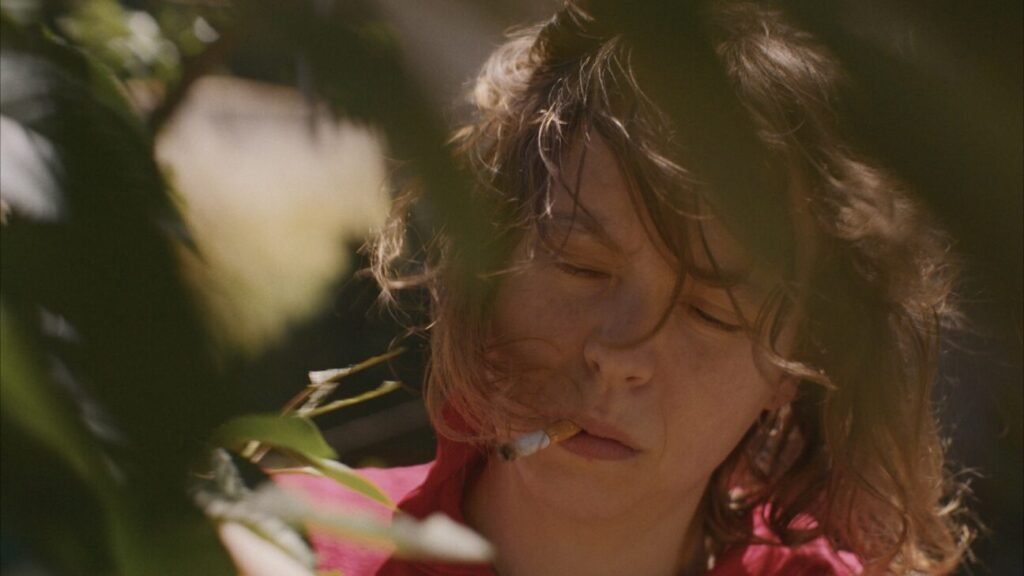
Do you find it weird that audiences are picking apart young Angelica in such a way? It feels intimate—but maybe it’s not intimate.
It’s just a movie—not in a [dismissive] way, but it doesn’t seem intimate to me because it’s a closed unit. I have control over it.
You reference Harry Kümel’s Daughters of Darkness (1971). I was just on the Belgian seaside last weekend, actually.
I was also there while researching. It’s crazy.
It’s so weird!
I was very disappointed because I thought the location inside the hotel was actually in the Thermae [Palace Hotel], but it’s not. It’s another hotel.
This got me thinking about references to queerness, but also queerness as it exists in different modes, like documentary cinema. There’s a big conversation about queering the form, whatever this means to different people. I’m seeing a lot of documentaries that are more explanatory when it comes to queerness, but La belle année is very different.
On the formal side, I was trying very hard to maintain two storylines and run them while doing this movie. It’s important because it’s about how things are held together in this world. It’s not just a love story about a teacher—it’s about a person with queer desire going through this world and experiencing what everyone experiences. For me, there’s a lot of [undue] attachment to being one thing—just one. I don’t know if that’s a feeling specific to queerness, though…. How can I describe something without saying what it’s not? I was never trying to make the story of a coming-out. I think we’re past that. It’s more about treating desires just as desires.
What about the archival footage, both in terms of family archives and otherwise?
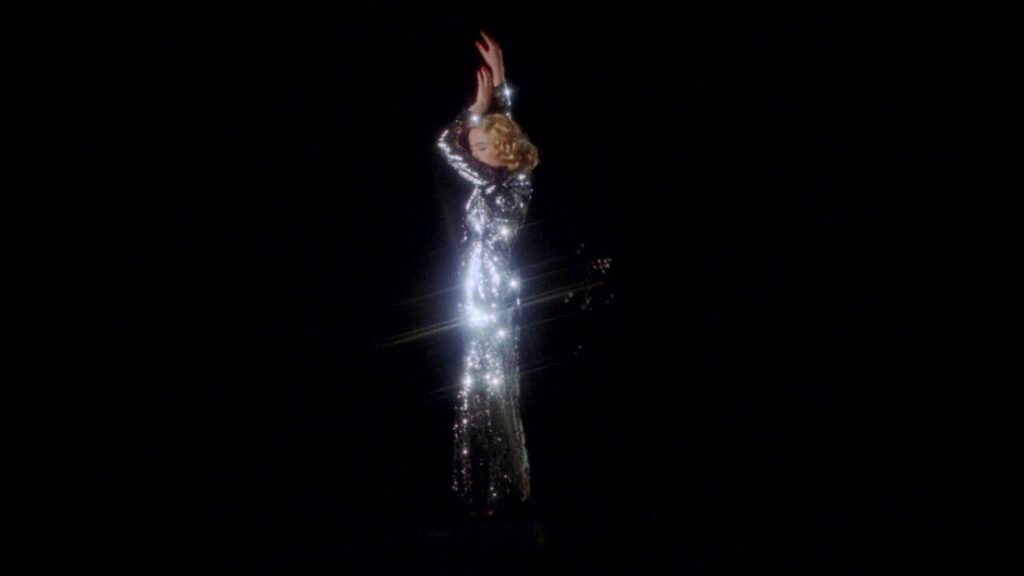
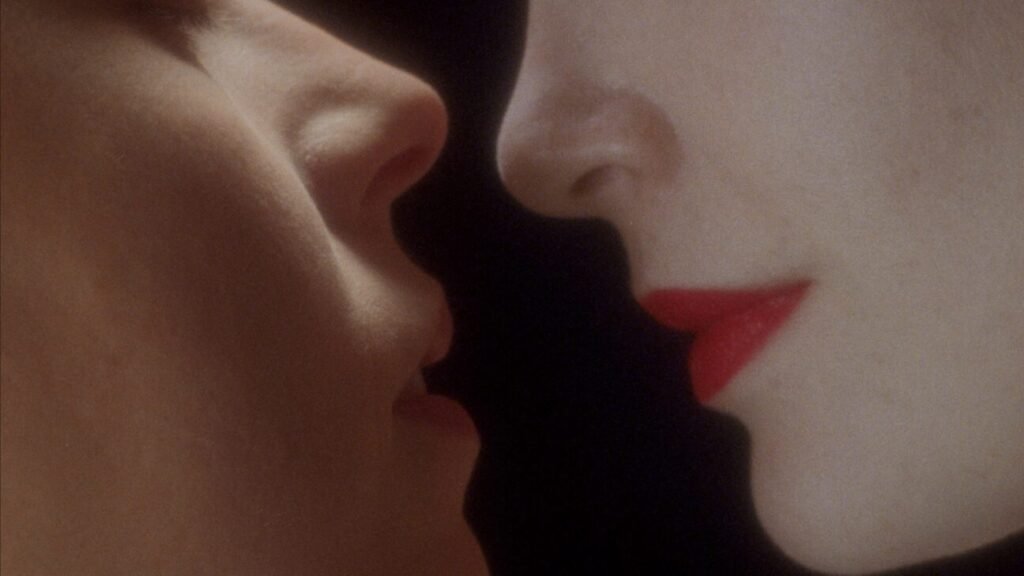
The archival family videos came two years in. Every time, it’s a discovery process. Suddenly, you can show something that was only words before. Now, you can show the young person. You can show the dad. It’s also somehow a kind of proof—I’m holding it and aligning it to history somehow. Then the archival films, which are Daughters of Darkness [starring Delphine Seyrig] and Loulou (1980) [by Maurice Pialat and starring Isabelle Huppert]—how do your desires arise and take shape? They are also shaped by the things you watch and discover. Seeing those two women kiss, seeing Delphine Seyrig move through, seeing Isabelle Huppert in The Piano Teacher (2001) [by Michael Haeneke]—these shape your desires into something.
I am super inspired by and remember seeing Todd Haynes’ Carol (2015). I was amazed by Carol because I felt like it was really a love song. I could identify some sapphic desire, but I could also see it from a point of view of the power dynamics and this desire to be with, but also to be, someone—to have someone’s life. I think those dynamics work for me.
I also find the film so fascinating is perhaps because of this element of the unknown that you cultivate so beautifully. I think we expect that the emotions we held so long ago to be with us forever, in some form but intact, even if we don’t actively feel them. In La belle année, you depict or construct the process of unearthing them from the ground up, and then you allow us to feel them in that form—even though it’s something you left behind or had even forgotten about.
I feel like it’s absolutely that. In a transitional moment, like the death of a parent, everything is all too real. Suddenly, instead of doing what you should do, you take another road. You do this because those shifting moments of death open a space for restructuring. It has a slightly different pace. This was also something I wanted to construct—time, which stretches a bit. You have time to immerse yourself. But the whole thing might just be a gigantic dissociation as well. I see it so much as a movie, and I did even from when [I first uncovered the journals]. My processing of everything is also a bit displaced.
Speaking of dissociation, there’s a quote in the voiceover that talks about how forgetfulness is a form of survival.
It was written by my 16-year-old self, and she was writing it because of the dada. She could still live and be happy because forgetfulness was such a strong tool. However, I always wondered why Daughters of Darkness—and I had to get Harry Kümel’s approval [to put a clip in the film]. There is something in how these storylines coexist. I did not want to land in the father’s power. I wanted to praise the power of taking your own road and being inspired by some other person’s energy. That’s why the movie also goes toward the brother and Sylvie. I had a really profound desire for it to be a feel-good movie! [laughs] There we go. Have you seen the new Shahrbanoo Sadat film, No Good Men (2026)?
No, I haven’t seen it yet.
I haven’t seen it either, but it’s a feel-good film in a feel-bad place, and I was like, “This is so genius.”
As the film travels, have there been any particular reactions that have really stuck with you or surprised you?
I was in South Korea recently, and I showed the film in Seoul. This man came to me, and he said, “I don’t really understand the energy. It feels like you are just down. All this life is waiting on you, and there’s no escape.” I was like, no, it’s really the reverse. So that was something. But also, I went to this beautiful queer film festival [Pink Apple] in Zürich, and I had an audience with a really older generation of queer women that I met nowhere else, who were amazing in sharing their own stories of finding and loving women.
That sounds beautifully sapphic.
It really stuck with me in my heart, and I also received a physical letter.
*****
La belle année made its Spanish premiere in the Zabaltegi-Tabakalera section of the 74th San Sebastián International Film Festival (16–26 September 2026).
Watch the trailer for the film here:


