

In a mountainous town in southwest China, a family is burdened by what they perceive as the invasive homosexuality of their eldest child. This devious nature is considered to be the result of a “Demon Girl”, an aborted daughter of the mother. Having reincarnated in the child, who is supposed to be already married to a female family heiress, this demonic soul haunts their family bond and status. This very Demon Girl, in fact, haunts the body of director Hao Zhou, who carefully and intimately films the relationships with their family and the magic rituals carried out daily to save them from anti-heteronormative damnation (the family refers to the filmmaker by their given name Hao—and as a son and grandson with he/him pronouns, although this is not how they identify). This short documentary, Correct Me If I’m Wrong (2025, 如你所愿) is part of the Short & Mid-length selection of the 2025 International Rotterdam Film Festival, where it offers a new perspective on the demonic in a familiar environment.
The documentary’s structure heavily lies in the importance of words. Whether during conversations or part of the rituals, words work like incitements or manifestations; in short, they are bearers of change. By wishing our protagonist to change and settle down with a woman, or asking the spirits and ancestors to transform their soul and nature, the family moves in a circle focused on getting rid of the Demon Girl forever. At the core of these rituals are the elderly women, whose harsh and strict behaviours are shot via a comforting still camera, subtly introducing the paradoxical relationship between them and the director-protagonist. They are troubled by the conviction that there is nothing wrong with them, yet the importance of their familial community implores that they trust the elders, to, in fact, “correct” Hao’s faults. Fittingly, the original title in Chinese (如你所愿, rú nǐ súo yuǎn) translates to “as you wish” or “by your will”.
Hao is caring with the film’s shots, although they occasionally feel intrusive: the external eye of the camera looks for a reason for anger in front of these constrictions. Still, the short deeply sympathises with its protagonist, stuck between family love, social norms, and their own identity. The filmmaker successfully creates a safe space to show their incoherent and confused feelings about the transformations that are being magically attempted and the traumas and tensions that consequently unveil themselves. In the family’s frame of mind, certain things are firm: a Demon Girl that haunts the body of a “young man” who is told should care for the family roots in order to fulfil his role as “son”. As the women in charge publicly shame Hao’s sexuality, the only source of comfort is from their sister—but even then, she recommends that they keep going along with their family’s wishes to continue the rituals. An overarching question lingers: what is the right thing to do in the face of all this pressure, responsibility, and guilt?
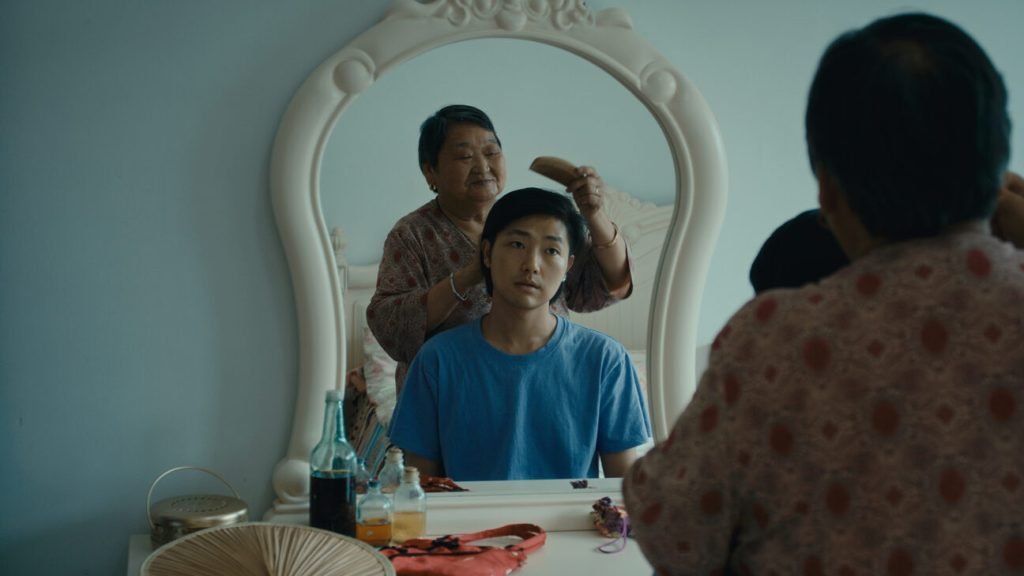
The protagonist’s life oscillates between the untold and the overtold. Hao hears directly when the community thinks the problem is (“A she-boy is a psychiatric problem. How do you even fix a she-boy?”) and how they feel about Hao. At the same time, many conversations are absent and sometimes take the shape of a shared overwhelming gaze: sometimes, what is left unsaid is more important. These juxtaposed moments are smoothly edited together, creating a balance in this daily emotional incoherence. With this, Correct Me If I’m Wrong stands out for its piercing yet soft photography and thoughtful editing.
Hao’s sentiments and relationships are put onto film through routines, structure, and repetitiveness. As a result, an uneasy tension builds up throughout the short, as if it almost invites the audience to join the whispered utterances of “Demon Girl, you must leave”. The director’s crafting of the short’s narrative embodies the suffering and injustice behind the rituals and the interactions, but sometimes it seems like they don’t even believe themselves—as if they instead believe that one’s devious nature is really the fruit of past ancestors’ sins and tragedies. Whispers, echoing words, and repetitive actions spiral out of control in a turbine of reminders of one’s faulty nature and of one’s role in the community.
In just twenty minutes, Correct Me If I’m Wrong effortlessly depicts the contradictions embedded in family and community within heteronormative and traditional structures. There is a conflicting sense of confusion and discomfort, but there is also compassion for those raising and hurting us. Maybe there is no right way to respond and act, and the filmmaker effortlessly delivers this testament by letting us witness their struggle made of love—yet the guilt lingers.


