

In our (late) May edition of CURATOR TALKS, we had the pleasure of chatting with Faridah Gbadamosi, senior programmer at Tribeca Festival, to talk about this famed New York City festival, whose 25th edition will run 3–14 June 2026. Among her many roles as a film programmer, curator, and culture critic, she previously served as the artistic director of Los Angeles’ Outfest and worked with San Francisco’s Frameline and New York’s NewFest. She also served on the 2025 Queer Palm jury (15th annual) at Cannes Film Festival, where the jury, chaired by Christophe Honoré and alongside Brazilian filmmaker Marcelo Caetano, selected Hafsia Herzi‘s The Little Sister as the feature film winner (read our review of the film here).
In this conversation, we dig deep into a curatorial shift toward breadth rather than sheer representation, Tribeca’s pursuit of being in conversation with the audience, questioning what exactly “queer cinema” is—and why festivals are maybe the best place to be interrogating this question.
*****
Purple Hour: Part of your work as a curator is in the inclusion space at festivals. How does this inform your work as a programmer, and how does it connect to curating queer cinema?
Faridah Gbadamosi: I didn’t study film, so I’m watching a creative film the same way I’m watching, you know, Like Mike. For me, it’s all inherently entertainment, so I can navigate the conversations about craft the same as I can navigate questions about audience. That is one of the things I really like about working at Tribeca, because it is an audience-driven festival, so you can have both types of films with us.
For me, inclusion is really about showing a variety of experiences and not just one specific experience. In the past, well-meaning programmers have curated a very specific idea of what queerness is to teach the public how to interact with queerness. What changed with curation is that we’re now in conversation with an audience that might know more information than some of the programmers. Instead of thinking we’re teaching, we’re actually in conversation. We’re getting more direct feedback in a way that we weren’t getting before, like whether or not this film works or doesn’t work.
One of the things that was really big about 10 years ago with queer film was, why do all the stories kind of end with queer people dying? I was a big TV watcher when that week of all the lesbians dying on television happened, and everyone was just like, wow. I think media has responded to that, and curators have had to catch up as well. We are now seeing audiences who have a voice, rather than us giving them a voice. That’s what’s shifted in how we look at inclusion and diversity—not just in queer voices, but for people of colour and for women, too. We’re now in conversations, and they’re telling us, “Actually, we don’t like that, you didn’t get that right.” Or, “We would like to be seen in a different way.”
There’s also the opportunity for a variety of versions of experiences in the same space. You can have all those conversations at the same time without it feeling like we’re taking up too much air in the conversations about queer cinema. We are now in a place where we have audiences that are interested in multiple conversations. That’s what curation is kind of responding to now.
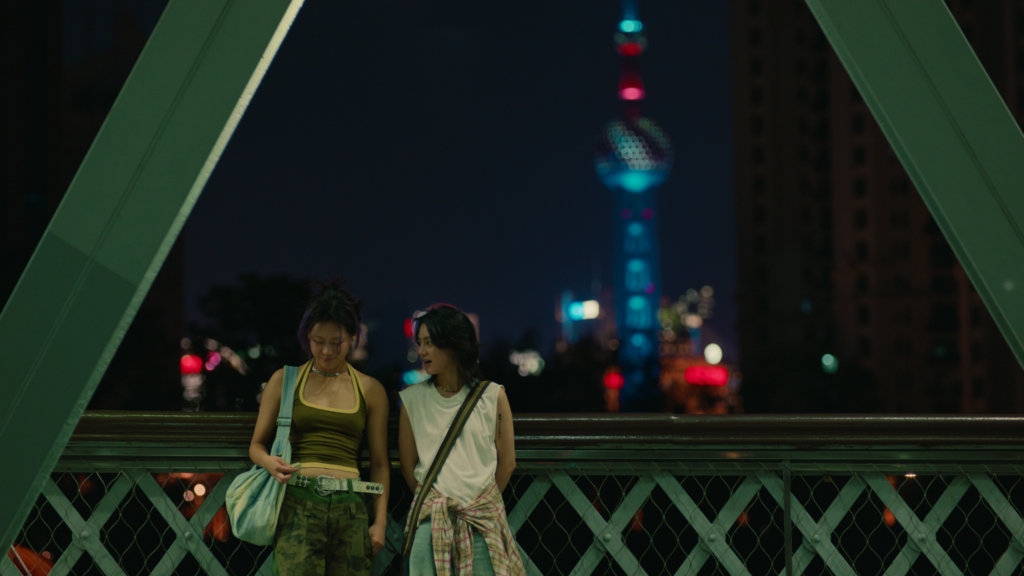 Still from ‘Ephemera’ (2026) by Shan Jiang, making its world premiere at Tribeca
How does Tribeca think about queer cinema as a whole and what falls under this umbrella? Is this process typically more filmmaker-driven, or is it on programmers to look at a film and think about how an audience would view it?
We allow films to identify whatever way they want. [Filmmakers] are allowed to put whatever information they would like. We would like as much information as possible, because it helps with finding audiences for their films. If they don’t want to put that information in, we don’t make assumptions, but we do, ultimately, watch the films. If there’s a queer character within it, we’ll note it largely because we know that people like seeing themselves onscreen—same if there are Black characters or Black-centric stories or stuff of that nature.
When we write descriptions of films, we do let filmmakers see what the description looks like, just in case they specifically didn’t want to note it. We never want to put a film in a position that the filmmaker doesn’t want to put it in. In terms of the curation process, we’re really just watching to see what works and what doesn’t work. Of course, we want to show a good amount of queer films. I’m on the team, and there are other members of the team who also have an eye out for that particular topic, because it’s of interest to us. But we’re not going, “Okay, cool, we’ve hit our quota of queer films.” We’re really just seeing what stories are really resonating with us, and films that are queer stories are also resonating with us, not just because they’re queer.
This year, we have Ephemera (2026)—there are so many films that clearly live in the legacy of Before Sunrise, or two people on a date. Then we have a film like Small Town Gay Bar (2006), which is great as a retrospective or [the 30th anniversary of] Bound (1996)—I’m very excited for that. There are so many different types of queerness you’ll see onscreen that it’s hard to be like, “We’re looking just for this one.” We’re also looking for a story that makes sense for our audience, because, as I’ve said, we’re ultimately a festival that is very much in conversation with our audience—constantly.
Of films you’ve screened in the last few years, have you noticed any larger themes or trends that have emerged within this body of queer films?
There’s less of the “teaching” film. It’s not that I’m [against this type of film], but there are fewer of the “learn who we are” films and more “this is how we live” films. It’s very exciting to see that a lot of queer filmmakers no longer feel like they have to explain their existence in films. There are more films that are just about being—and crossing over and showing up in mainstream festivals. Especially as someone who has worked at queer film festivals, there was a lot more variety because of the nature of it all being queer. I like that this variety now exists in a large festival like Tribeca. It’s a great trend that a person no longer feels like they have to explain themselves and their storytelling. Also, I love a coming-of-age and a coming-of-queer story, but there are just not as many anymore. I think people are at different stages in how they navigate their queerness and how what they want to show onscreen about that experience.
I’ve seen more films about queer elders, too.
Exactly—more about what it means to age, what it means to go through divorce as a queer couple, which we had at the festival a few years ago. We have Mineshaft: The Cruising Murders (2026) at the festival this year, which centres on a queer club that existed and is kind of in the storyline that ended up making the film Cruising (1980), so there’s a whole history behind it. It’s also fun to look at queer films playing around with film history that is not just about harm. There are a lot of fascinating ways in which queer stories are showing up now and how those stories are mixing. I really do enjoy that we’re seeing more queer outdoor stories, because I do think that sometimes we lose a lot—as Black people, we say we’re “losing our recipes”—when we don’t know things from the past. I think we are losing our recipes, so I’m also very excited to have those sorts of stories come through and create this intergenerational dialogue.
Can you talk about the intersection between Tribeca’s identity as a US/New York festival and the queer films it screens? Where does this line of thought go for you?
For me, the most interesting conversation around American cinema—what we consider the canon, where festivals land, and how queer cinema fits—is the conversation being had as to whether or not queer cinema is literally just a queer person existing within the piece. I’m thinking of The Watermelon Woman (1996) or Tongues Untied (1989) and how they played around with the form of what a documentary is, but we put them in the box of what queer cinema is because it was about queerness. Now that we’re playing around with the form of documentary, we’re realising that they also were changing the form. Is queer cinema ultimately changing form? Festivals are in an ideal position to have that conversation. What does queer cinema mean now? What is it? Is it just the act of a queer person existing, or is there a specific touch to it? Is there an identity behind it, a voice behind it? Is it about how it’s structured and what their goals are? I think festivals are really a great place for those conversations to happen, because festivals have frequently taken on the burden of showing their stories.
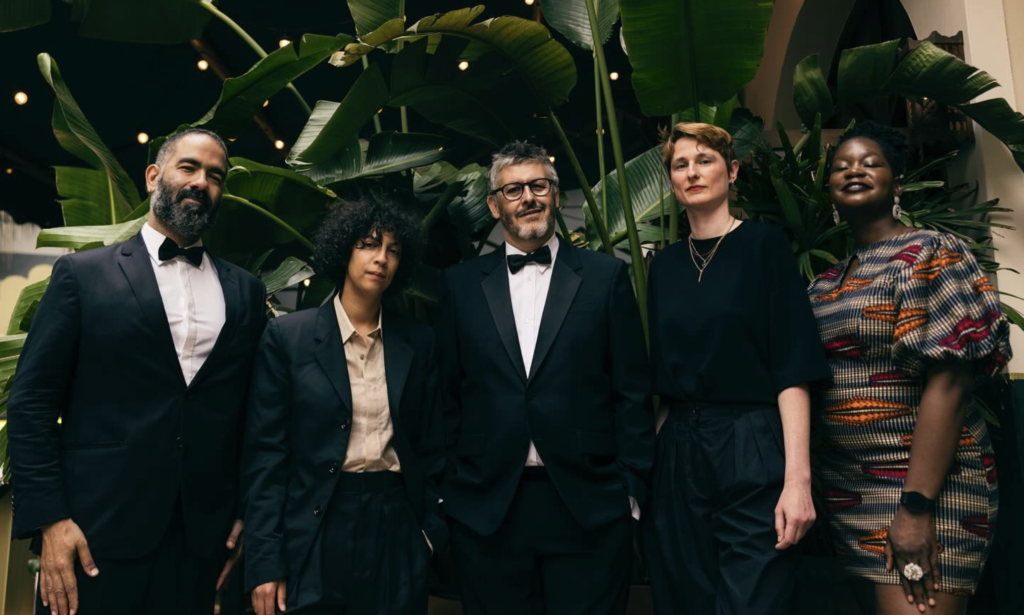 The 2025 Queer Palm jury (Photo credit: Marie Rouge)
You served on the Queer Palm jury last year. Could you share a bit about that experience?
Queer Palm is amazing. The president of the jury was one of my favourite directors, but I didn’t tell him until the last day—I love Christophe Honoré. It was just really exciting to sit in conversation about films and talk about what works and what doesn’t work with a group of experts, and then have all the stories inherently be navigating very different facets of queer life. The cool thing about the Queen Palm is that a film doesn’t win for being the “queerest”—it wins for being a fantastic film that also deals with queer themes. I think that’s an exciting way to have a conversation. Sometimes we get so caught up in the category of queer instead of the thematics that exist within it. Instead of trying to figure out what the whole thing means, it’s about the different themes everyone’s playing around within it. Being on the Queer Palm jury was a very exciting affirmation that there is a different way to approach it, and it’s probably the more exciting way to look at it.
You’ve been speaking a lot about Tribeca’s audience-first angle. What does this mean to you as a programmer?
I feel very excited to work at Tribeca, because we work in New York City, where you can find just about any audience. I like to sometimes see festivals as a “one plus” festival, where a lot of people might come in to see one particular film, and then we convince them to see something else. In terms of bringing in an audience, we have an amazing marketing team that is always putting the work out there and reaching out to different audiences to see who might come to the room. We’re also trying to programme a wide variety of life to match the wide variety of experiences New Yorkers have. It’s impossible to make sure that everyone’s onscreen. However, I think we do a phenomenal job of making sure that there are multiplicities of stories that exist, so that people can at least find things that feel similar. It results in really wonderful experiences. We did Move Ya Body: The Birth of House (2025) last year, which was like a fun dance movie, and we did a dance party afterwards. We also did Ride or Die (2025), which is like a quieter road movie. Some of those audiences probably carried over, and some of them didn’t. But still, it’s where people are seeing themselves and engaging. I think that’s kind of the approach we take to audiences.
*****
The 25th edition of Tribeca Festival runs 3–14 June 2026.
Tickets and passes are available now on the festival website.


