

Very rapidly after Bones and Names (2023, Knochen und Namen) and Sad Jokes (2024) [read our review of the film here] comes German multi-hyphenate Fabian Stumm’s third feature, The Ideas (2026, Die Ideen). Despite being an anthology film, it still bears all the hallmarks of his other two works that have accompanied his rise as a lauded face, particularly in the German-language cinema world: an impressive grasp of character, strong dialogue, and a unified directorial style.
Yet, perhaps The Ideas also marks a unique bend in the road, as we discuss with the actor-writer-director during a conversation within the context of Zurich Film Festival, where the film is playing in the Feature Film Competition. Of course, not all questions remain answered, but hopefully enough to whet your appetite on the ideas—if you will—of auteurism, creative restraints, industry antics, post-queer cinema, a film being “queer enough”, and learning from our art.
*****
Purple Hour: Over your three feature films, you’ve curated a very distinctive visual style, working with much of the same team both behind and in front of the camera. What brings you to stick to this approach?
Fabian Stumm: I find it very lovely to work with friends, basically. I would say 90% of the people on the team or from the cast are part of my friend group. For this film, a lot of the cast members were new, so I got to meet them now. But behind the scenes, I’m very close with most of the people. We’re very comfortable with each other. It’s a very warm atmosphere. That’s the only way I know how to work, and I really need that to tell these stories in the way I want to. Obviously, all of us have the same urge to go create something together. As the writer-director, I guess I’m kind of leading the way, but it does feel like a very communal experience in the way we all come together.
You also commit to a funding model that’s small and sustainable.
Yes—it’s also an economical decision. I guess…how do I phrase this? I wonder why these films keep getting bigger and more expensive. Sometimes, I really don’t see the point. I think, in art, it could also be helpful to maybe stop and consider the resources you have in order to tell a story. I find it liberating to take five steps back instead of always being five steps ahead of everything—trying to make it bigger and larger and faster.
I take it that you’ve also had the opportunity to deviate from this model.
I’m now developing three films with bigger companies. I have a film in development with Komplizen Film, who did Toni Erdmann and Sentimental Value, and I love working with them. It’s really wonderful—we have a great connection. We’re going to film next fall if all goes well, but it’s a much bigger film. It’s very interesting to me to get to know these ways of working and developing a film. I really enjoy all the steps. But if I imagine making every film like this, I would make, I guess, two films in the next seven years or something.
[The way I work now] is also about putting in fast work without making it artistically cheap. My ideal would be to make films with a proper budget, to be able to pay your people—all while working with professionals whom I admire and can learn from, keeping my own little programme going. I never studied directing, so this is also a way for me to learn and experience that on a small scale. I feel blessed that people seem to enjoy my films and want to put them out in the world, but that was just a gift. That was never the initial plan. I wouldn’t have ever dreamt it.
I think the trust that bigger companies now have toward me also comes from two angles. First, of course, they enjoy the films, but then they also see that someone can do this with a very small amount of time and budget while still managing to put in interesting work. Then, it’s a matter of seeing what happens if we open it up a little bit [with the budget and scale].
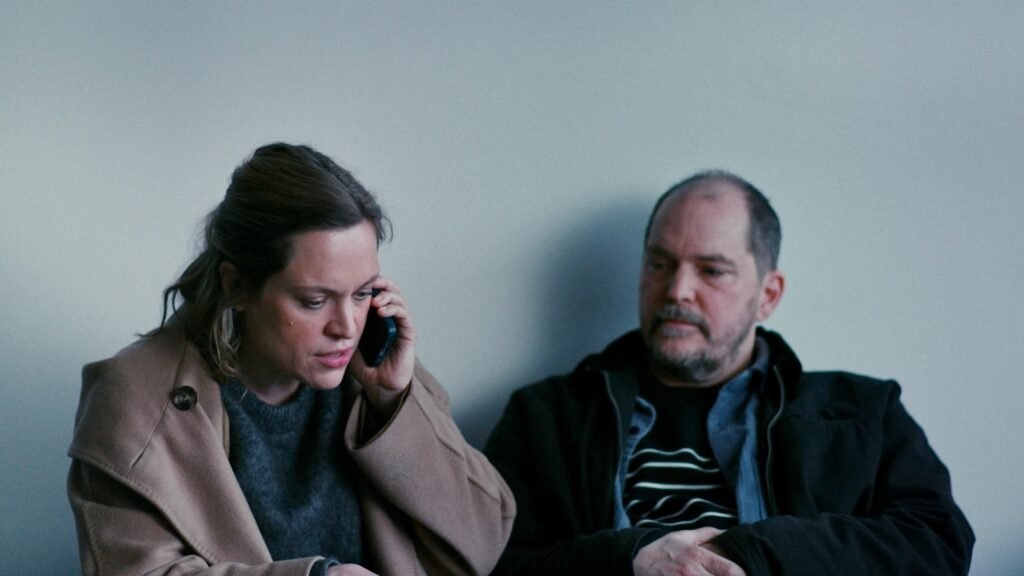
Because of the reasons we’ve just discussed—often a unified style, working with the same people—do you identify with the term “auteur” at all? Do you have a relationship with the concept of auteurism?
That’s a very interesting question. It’s only very recently that I started to reflect on this. When I started directing my own films, it was very instinctive and unconscious. With Bones and Names, my first film, I told myself I wanted to make a film in which I didn’t listen to anything from the outside. I just did it exactly the way that I would enjoy watching a film, no matter what that meant, and that’s how it turned out. I thus felt comfortable with that style, if you want to call it that. Sad Jokes was also much widely well-received than I imagined. I remember saying to my team and to the distributor, when we started working on The Ideas, that it did feel like the end of a trilogy, in a way. If you put these three films together, they do talk to each other, as I see it. However, I am quite interested in taking a new step after this and seeing what that will be like.
I was very flattered when I started reading reviews about my films, where people started to use the concept of auteur. I just got these new reviews in the last days, too. There was something about it in German, like, “It’s now become clear that he has developed his own style: you watch two scenes, and you immediately know it’s a film by Fabian Stumm.” I find this very flattering, but also a bit…
People perceive your work in a different way than you inherently see it.
Yes. Sometimes you can immediately tell it’s a film by so-and-so. That’s great, but then again, someone like François Ozon or Claude Lelouch or whoever you want to say, have done so many things that are so varied. I guess I feel a little bit small in terms of this. I would never call myself an auteur who has developed his own style. It’s much more instinctive. I’m a little bit scared of what might happen if I woke up in the morning and started thinking, “I’m an auteur, and this is my style.” I don’t know if that’s the way to go. But if other people want to put it like that, I guess I’m fine with it.
I understand that the business applies other labels to you, like being part of a new strand of queer filmmaking in Germany.
This label of being a German queer filmmaker—I get it, and I embrace it. I’m gay. But also, I’m a filmmaker. It’s a double-edged sword. I would never say, “I’m watching a new film by a female filmmaker.” I’m not interested in that, even though I get where it comes from. With this film, I’ve had people say, “Oh, but there’s only one queer episode.” I always think, “But yeah, [what’s the big deal]?” I’m very wary of labels. I find them conflicting.
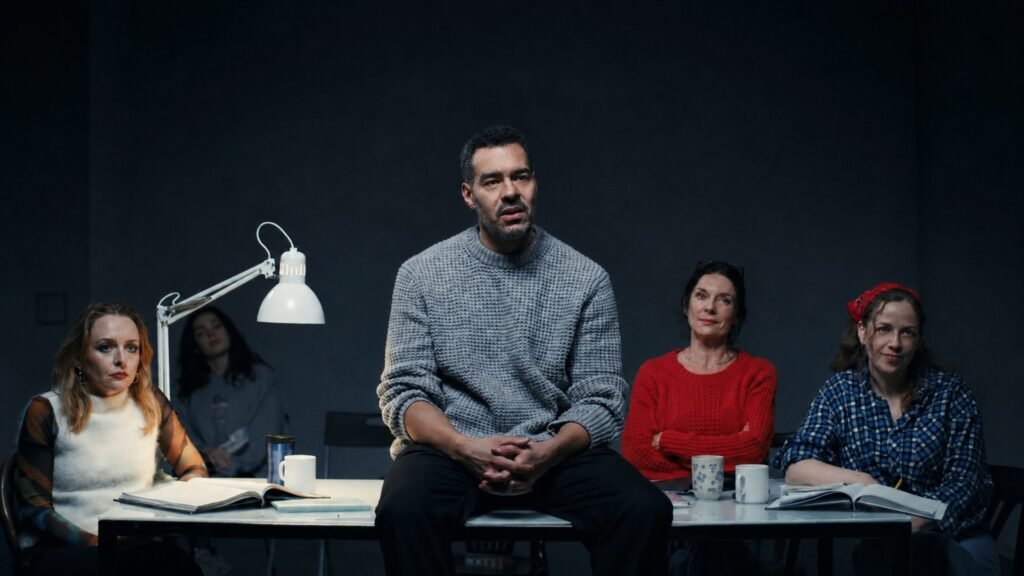
Do you have a relationship with not only being labeled a queer filmmaker, but also the concept of queer cinema as a whole—as a body of work?
The last thing I want to do is to put down [the concept of being a queer filmmaker]. I really embrace the way people perceive me and my work. For me, there was always a goal to talk about male characters in a way I had not seen onscreen. At least in Germany, there are not a lot of stories being told about queer perspectives that feel like how I live and how others around me live. I was very glad and touched that people embraced it.
But I am a gay man, so no matter what story I tell, I will always tell it from the perspective of a gay man, and I’m proud of it. It really doesn’t make a big difference to me if I tell a story about a man falling in love with a woman, or if it’s two women, or whatever. The gender is not so interesting to me. It’s really more about the humanity of it. I think it would be naïve to say, “These things don’t matter—I just want to tell human stories.” Of course, I do, but it doesn’t need to be two men just because I date men.
Someone told me recently that maybe The Ideas is more like post-queer cinema because of how it takes the next step, so to speak, and doesn’t really address queerness itself as a subject. It made me laugh because I don’t necessarily agree with the term, but I get what he meant, and there was something sweet about the way he put it.
There have been discussions about different “waves” of queer cinema: the coming-out film, the struggles embedded within queer life, and then getting to the everyday part of it, for example.
It would be naïve to say there’s no need anymore for these stories about queer trauma and drama and hardship. If you look around, there is. However, to me, art is also a certain vision of what the world could be if things change for the better. I enjoy putting something onscreen where people say, “Well, that’s kind of nice.” I remember for Bones and Names, people would say, “Ah, but it’s not really like that—the two men have it really easy.” I was like, “Well, yeah, but maybe one day we will have it easy, because why should it be hard?”
I’m curious if you’ve had interactions in such cases where people are reading and labeling The Ideas differently or having certain reactions because of what you’ve mentioned.
It was also an interesting journey here. You could perceive it as “less queer” than my other two films. When I was in talks with festivals that programmed my other two films, so far, none have programmed The Ideas because they said it doesn’t really work for a queer festival. You watch like 90 minutes of heteronormative stories, and then the last episode is two women, so I get it. But even in terms of distribution, we’ve had talks about this: what would be the right fit? It’s fascinating because when I was starting out, it felt a little bit like the other way around. People would say, “They’re very gay—it’s going to be very niche.” Now it’s: “They’re not gay enough, so maybe you have to take the other road again.”
It’s like one can’t win either way with these boxes we’re put in.
It’s all about the narrative, and it fits a certain mold. I get it— they turn films into products in a way, creative products. You have to sell them. You have to programme them, and films have their audience. Festivals and distributors know what they may be looking for. But you know what? In a way, I’ve made my peace with it now. I admit I’ve had moments of struggle because it took unexpectedly longer with this film. So far, it’s always been: make a film, it pops up at a big festival, and people love it. It was easy.
With this film, it took a little bit of time. People were super interested, and they really liked it. I’ve been told it was a little bit harder to programme because it goes a different direction than what people would expect from me, in terms of the storytelling—also, it’s an anthology film. But now, it’s quite exciting to me to be able to maybe go down the route in terms of festivals that don’t have a queer focus, but to still be the gay filmmaker who presents his film. It’s great, because then I can be in both worlds. Ask me in a year, and then we’ll see.
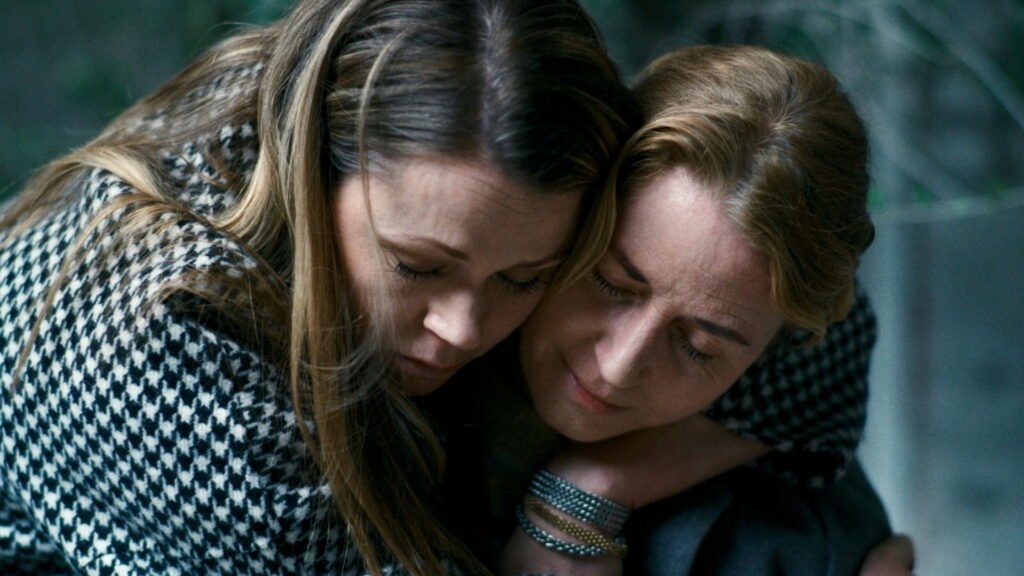
From working on The Ideas, you are the relationship expert now, let’s say. What do we not understand about relationships? What do you learn from your films?
With all my films, and with this film especially, I always realised after making them that I was trying to give myself answers and tools to navigate this. My team always made fun of me because, when I wrote the script and I finished, I said, “This film feels so new because it’s the first film that’s not autobiographical at all.” Then, when we started filming, I was crying all the time—I went home constantly, like, “Ahh!” But then I saw that it’s even more myself because it’s really about the difficulty of connecting with people, being open, not giving up, and confronting your fears and going for what you want. That’s why the last episode was so important for me. I wanted to end with this hug when Ulrica Flach, the Swedish actress, has this monologue where she’s blurting out what she wants to work on with her partner.
When I watch the film, it’s fun because I realise that by putting stuff on film, it really helps me in my private life. It really does. It makes me a little bit braver, I guess. I catch myself in moments where I would have struggled a bit more. Now I feel a bit more open to addressing the uncomfortable stuff. I see that the only way out is through. If you’re really open and if you meet people at face value, then that’s the most important thing.
*****
The Ideas is vying for the Golden Eye in the Feature Film Competition of Zurich Film Festival (24 September–4 October 2026).


