

Somewhere in a southern Taiwanese village, two 13-year-old boys from very different backgrounds become fast friends: the tall, long-haired Jun (Jaden Wang) and the sizably smaller Jasper (Aloysius Looi). Their tender, multi-layered friendship is at the centre of the solo debut feature of Taiwanese filmmaker Lu Po-shun, titled Will You Still Be My Friend? (日光 in Chinese, translated literally as “sunlight”), which made its world premiere in the San Sebastián International Film Festival’s New Directors strand. The screenplay was co-written by Lu and Chen Chia-ping.
Lu utilises what might be described as an open-ended approach to queer storytelling; that is, the close relationship between the boys is a strong friendship at its core. The choice to read it as more is in the hands of the viewer, even if the filmmaker explicitly offers that choice with an admission close to the end of the work: “I like you”, spoken by Jun in a heated moment. Jun’s grandfather is the village chief, a small-scale elected position in rural areas of Taiwan, while Jasper’s parents are Singaporean émigrés trying to build their solar panel business. We later learn that Jasper’s parents encouraged their son to become friends with Jun in order to curry favour with his grandfather, only for their friendship to flourish organically.
We never witness the start of the boys’ friendship and are instead plopped into a moment when they are already close, allowing the story to speed ahead to its juiciest. Jun is friends with a number of jeering, stuck-up local boys who constantly bully and ostracise Jasper for his background, all while Jun tries to bring him into the group. The two boys on their own, however, are like two peas in a pod.
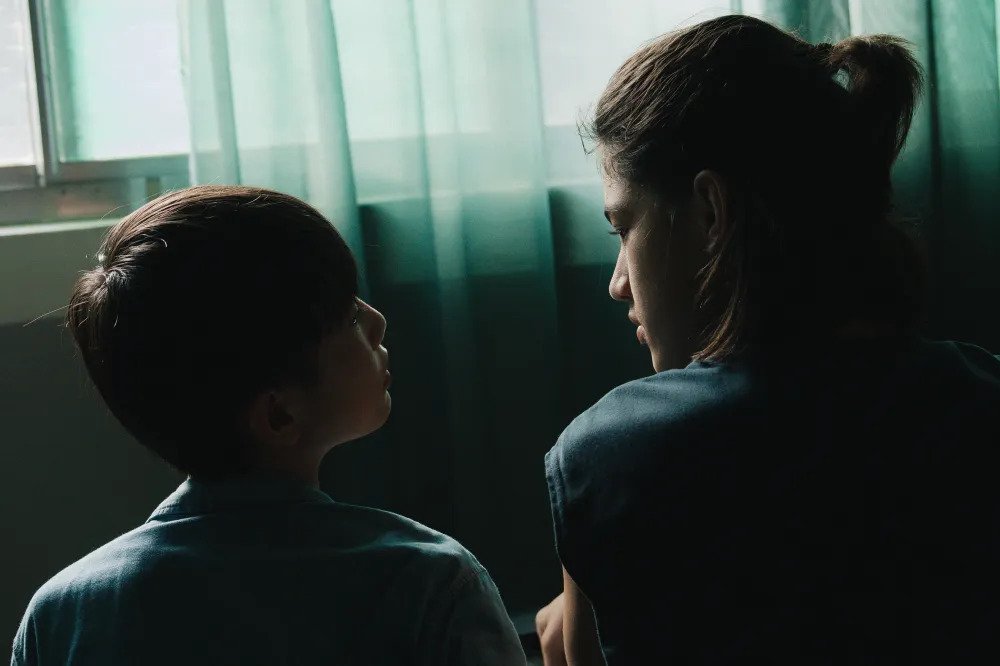
It must be said that Lu subverts an expectation that Jasper is the one to have feelings for Jun, rather than the other way around, as it is later shown—without ever discounting the vice-versa possibility. Jun has more of an archetype as a person of affection, in light of his big friend group and confidence in navigating the local community. At the same time, our alignment with Jasper’s position as a transplant at the beginning of the film feels innately like he would be the one to have feelings for the other. There is something pleasantly surprising that Lu turns both of these would-be tropes, in a way, upside down.
The director is able to get intimately close to his central pair, relying on handheld camera (cinematography by Shyan Tan) to convey a sort of rugged sense of childhood. The actions of Jasper’s parents are increasingly seen as harmful to their village and way of life, in which the installation of solar panels on viable land is a threat to agriculture, while floating aquavoltaics are seen as a threat to fish farming (the battle between renewables and farmers is extremely tangible today in contemporary Taiwanese rural politics). Mass protests against the renewable energy infrastructure dominate the subconscious lives of the boys while they try to keep to themselves and let the adults handle it, so to speak. The filmic universe constantly pivots between the private world of the two boys and whirlwind of a community by which they are constantly affected but have no way to resist or control.
For some viewers that demand a more “direct” story of queerness, others may come to find that Lu ultimately does capture it to its fullest in forms that are resonant with real life of childhood before one has a self-perception of being queer: soft-spoken compliments, fear of being accused of something, a quiet protection of someone you like, and a desire for time spent at all costs with that person. Instead of profound admissions of love or kitschy moments that spell out the nature of their attraction, the boys’ relationship is muddled by their families’ and community’s social pressures, all of which never put them as fated to be close. By the end, we understand that Jun’s defence of Jasper, for instance, can be seen as an extension of his romantic feelings for his Singaporean-born friend.
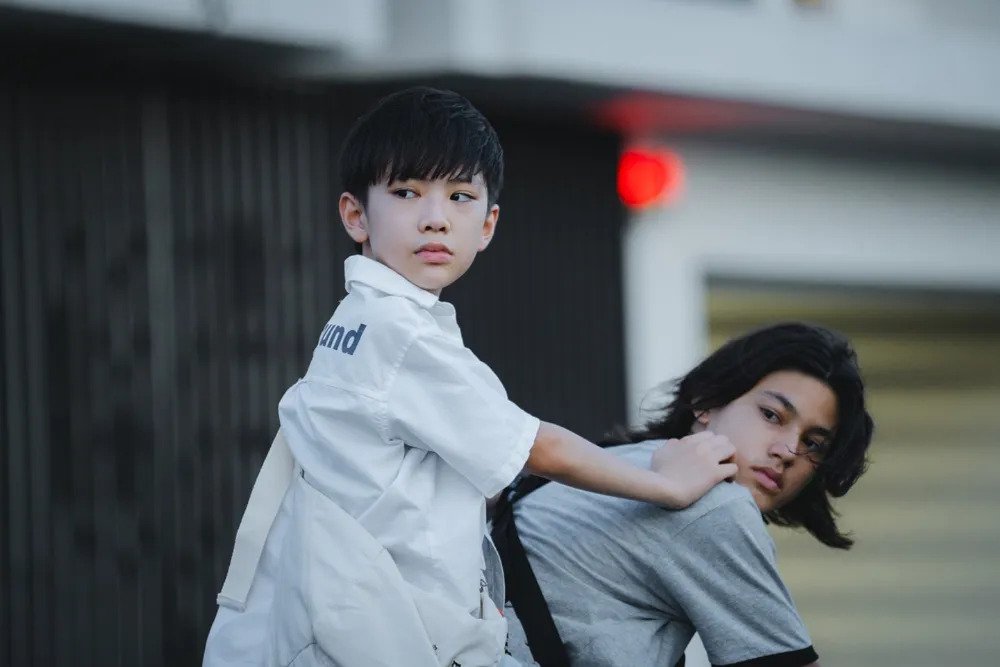
Will You Still Be My Friend? offers a second, perhaps more soul-shattering heartbreak. We later witness how Jasper’s parents fail to understand the nature of their son’s friendship with Jun, so focused on their business venture that they leave little room for the intricacies of childhood; they even implore him to disregard the relationship despite being the ones to originally encourage it. This is certainly something that many of an Asian diasporic background may relate to, amplified by a lack of understanding from family about queer feelings. How do you verbalise something to a family who refuses to look outside of their bubble if you don’t even have the vocabulary to internalise it yourself? We can easily imagine how deeply Jasper will be scarred by this wilful ignorance of his truths, which are very different from those of his parents, even if they care for him.
This is where Lu ultimately excels: he crafts the sociopolitical influences of a small community so specific and recognisable that Will You Still Be My Friend? stands out as a uniquely Taiwanese film. He is able to make unfamiliar viewers privy to the local politics that shape ways of life in rural parts of the country, although it may not have its greatest impact on those not familiar with the environment. Even if the story of Jun and Jasper sometimes stumbles and fails to develop to its richest, to have a queer film so grounded in hyper-specific community dynamics while remaining close to its adolescent characters’ beautiful shared reality is a feat in and of itself.


