

At AGC, a majority-white all-girls Christian boarding school, the dorky but cherubic Luthando is boxed into an identity as the “scholarship kid”. In Black Burns Fast, we are placed into the world of our heroine (Esihle Ndleleni) and her best friend Jodie (Mila Smith), where the arrival of a new girl, Ayanda (Muadi Ilung), shakes Luthando’s world—romantically—and brings her in leagues with the school’s small posse of cool Black girls, who call themselves The Galz. Putting aside conventional coming-out moments, grand romantic gestures, and awkward sexual encounters, Cape Town-based, Eastern Cape-born filmmaker Sandulela Asanda creates an inventive and very playful piece that prioritises character experience over outcome. The writer-director understands that teen films have long oversimplified the personal process of self-discovery.
This is the filmmaker’s debut feature, which premiered at the Durban International Film Festival in 2025 and screened in the 2026 Berlinale Generation 14plus strand before going on to close London’s BFI Flare. Black Burns Fast also just won the Best First Feature award at Toronto’s Inside Out 2SLGBTQ+ Film Festival. Asanda’s last short, Mirror Mirror, screened at the Berlinale in 2023 (featuring leading characters with the same names, Luthando and Jodie) and also won Best South African Short at Durban 2023.
With the film screening next at San Francisco’s 50th edition of Frameline, we spoke with Asanda about resisting the adultification of Black girls onscreen, interrogating how the insidiousness of quiet homophobia and racism, and searching for queer film precedents as inspiration.
*****
Purple Hour: You centre the Black characters in an environment highly defined by race and socioeconomic class, but you also heavily decentre the male characters. A notable example that does this is Céline Sciamma’s Portrait of a Lady on Fire, where the men are simply just removed from the story entirely—because they’re irrelevant. How were you thinking of these two choices as both writer and director?
Sandulela Asanda: Even from writing it, that was always what I wanted. It’s so seldom that we get that—centring not just girls, but also Black girls in these schools, in these systems. I thought it was about damn time. Coming from my experience, as much as you’re in these boarding school bubbles, a lot of my life revolved around my friend group. We were the only Black girls, and we all banded together. I really wanted to emulate that because I wanted this film to be a love letter to queer Black girls at that age—like myself, who didn’t know I was queer, even though all the signs were there. It was important to have that happen also visually. Even my choice of the aspect ratio, I wanted it to have an intimate feeling and get us directly into the world, making sure people know from the get-go that this is our focus.
When I was researching for this film, I realised that a lot of teen content that comes out of South Africa is focused on boys. I was like, okay, well, let’s get rid of that. That’s very boring to me. Give the girls a chance to be seen—and also to be seen in different lights, with agency and with fears and with doubts. Also, I feel like a lot of media tends to adultify Black girls, and I really, really wanted to show that they’re still kids, even though they’re 17 or 18. They are still naïve. There’s a sense of childishness that they still have.
Could you expand on your research process and what you were looking at?
Contextually, a lot of this film did come from my own experiences, but at the same time, I didn’t want it to just be about that. Ironically, when I started writing this film, there was this reckoning with a lot of people my age who were Black students talking about their experiences at previously all-white schools. We found a lot of patterns, and this is even coming from students from 20 years ago, up until now, talking about the same experiences. That was really interesting to me—also, just to go through social media posts and track that. I started looking for queer African films. I feel like it’s really good to know the history that you come from, visually, and then determine how I could speak to that.
There were very few that were specifically focused on this group. I had Rafiki, but then I had to spread the net wider. I looked at American films as well, and the ones that stood out to me were Maria Maggenti’s The Incredibly True Adventure of Two Girls in Love, Pariah—which was a very big reference for me, especially visually, and I love [director] Dee Rees—and Céline Sciamma’s Girlhood as well. Those were big influences that I looked into about how Black girls are being portrayed in media in general. What do I like? What don’t I like? What can I push up against? As much as film is an art, I also feel like it’s a language, and there are things that I wanted to communicate and have conversations about with other films. I wanted to be very clear about who I’m talking to and what I’m talking about. Specifically with the adultification of Black girls, there were things I had to push up against and things I’m really going to emphasise in order to bring that portrayal back to reality—to be a reminder that just because she’s 18 and looks a certain way, it doesn’t mean that she’s not a child.
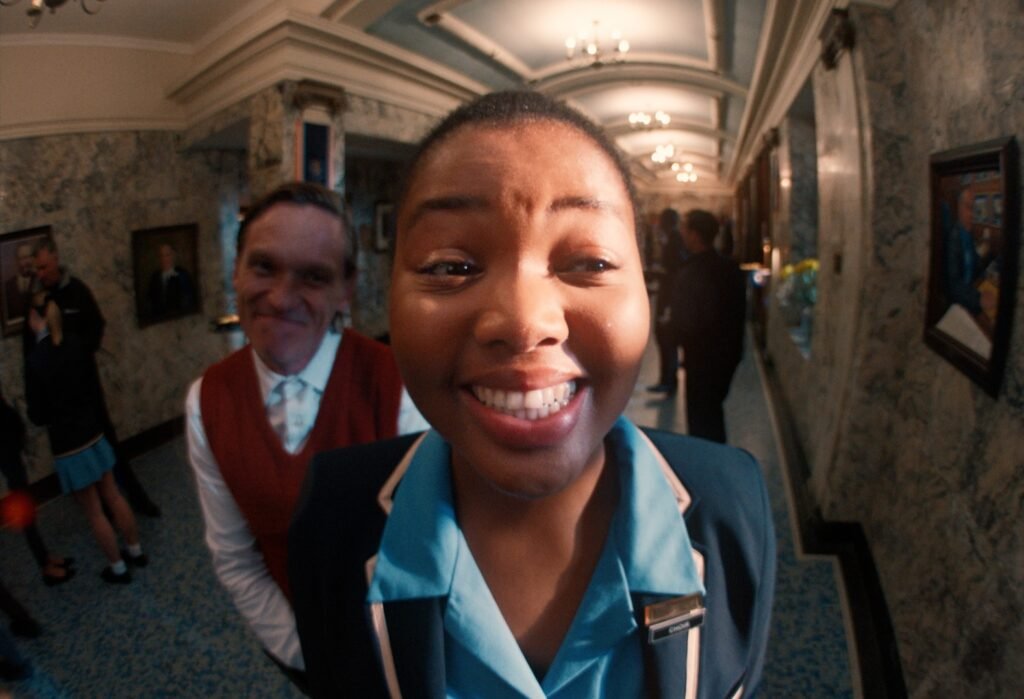
I think this brings out the playful tone of the film as well. The fish-eye lens shots, too, are so wonderful and fun. When you’re moving from script to screen, how are you thinking about tone, especially as you’ve created this very organic comedy?
I don’t consider myself a funny person, but I’ve been told otherwise. I think the tone found itself. At the beginning of my first draft, it was very scathing, and there was a lot of satire. I was ripping the schools, and I think I needed to do that job to just exorcise my own thoughts and experiences. So much of sapphic film, especially connected to Africans and Black girls and women, is also very dark and very scary. I wanted to counter that. As I was writing, I was looking for moments of levity. Thinking about these spaces in which there’s discrimination happening, the reason why we survived is because we had each other, and we were able to find levity in these situations. We were able to prop each other up and find joy. I was like, let me pump that into the script and keep going.
I’m really lucky to have a producer who works in development, and she was really great in keeping me accountable and pushing me in that direction. Comedy is a really easy way to disarm people when it comes to having conversations that are a bit tougher, especially when we’re talking about post-Apartheid South Africa and the residue from that. I also just think it’s part of our sense of humour as South Africans. We laugh most of the time, but that’s also because we keep from crying. It’s part of how we cope with it, and I wanted to play into that.
The film has this layer of homophobia and racism that floats up top, but you are very careful with the diction that you use in that it avoids language that viewers might describe as explicitly hateful. I think this is an extremely interesting approach, so I wanted to ask how you were approaching the scripting of the dialogue. As you said, it’s a light film that also deals with topics that are very heavy.
I did do that on purpose. The only word I can think of is “insidious”—the insidiousness of comphet [compulsory heterosexuality] and that type of language, which can be so subtle, but the signs melt into your brain and get into your head. I wanted to reflect how small things have an effect, like how Luthando says, “This is not a thing that AGC girls do.” It’s considered a thing, a phase, a distraction. Those are the terms that are used. They’re small things that chip away at your psyche, because they’re things that are also very easy to repeat yourself. Also, in terms of racism, the way people have spoken about it affects the psyche without even knowing. I really wanted to highlight that. Thank you for picking that up, because you’re the first person to ask me about that.
Most of the time, racism in these environments is not outward and in your face. It’s difficult to point out, and, as a result, you start to gaslight yourself, because you’re asking, did this actually happen? It makes me think of that Toni Morrison quote that everyone paraphrases about how the intent of racism is a distraction. It has you focusing on this one thing and blocks you off from all these other parts of who you can be as a person. It brings you down to your race or your sexuality so that you’re not able to unlock the other possibilities and avenues for yourself because you’re so fixated on trying to move yourself from this category. That’s essentially what happens with Luthando—she spent her entire school time being the “scholarship kid” and being considered low-class and Black. As a result, she didn’t have any capacity to view herself outside of that lens until someone was able to open it up for her. She wasn’t able to think of her sexuality. It was really important to me to show that this is how these things happen.
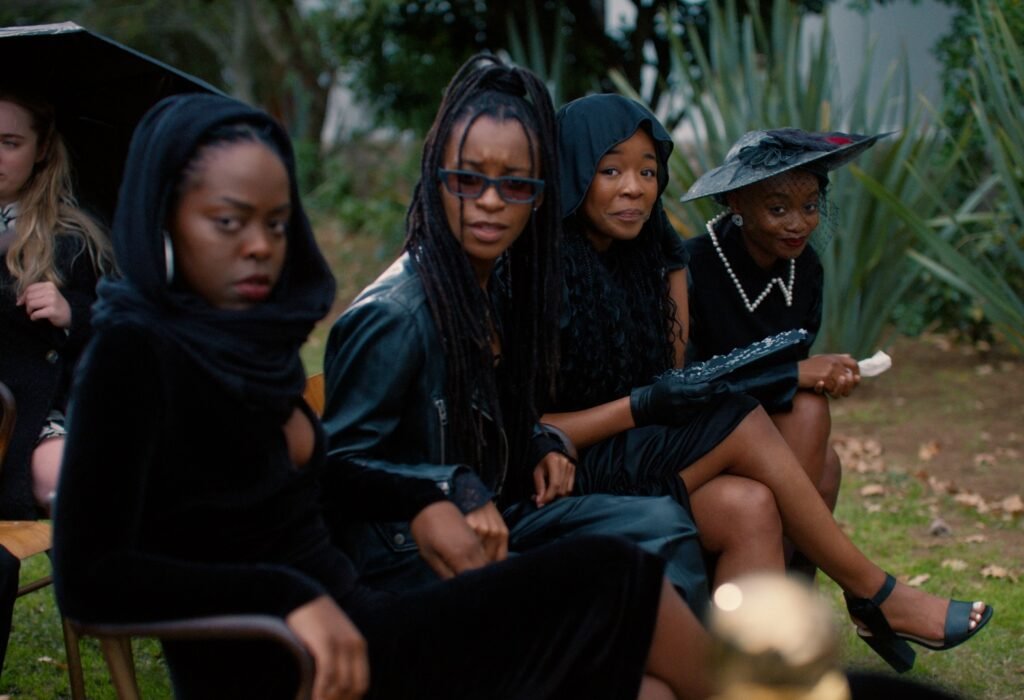
There is such great chemistry amongst “The Galz”. How did the casting process work?
We had an open self-tape process, and we had them send in for the character they wanted. For Esihle Ndleleni, who plays Luthando, I saw her videos and was like, that’s her. This was who I wrote. With the rest, I had them come in for callbacks, and then i had them do chemistry tests, all together rotating, mixing up, and doing lines. I did the same thing with the Jodies and the Luthandos and the Ayandas to see who really meshed.
The first time they found out that they were all together, I had a sleepover at my apartment, and we had a pizza and movie night so everyone could get to know each other—mess around and not be serious. We watched Bottoms, because I was like, “Listen, guys, this is kind of the vibe I want—irreverent fun, but treat yourself.” This is the stuff that we need to see in this country, and they immediately got it. I had so much fun with them. They were all super talented. For a lot of them, it was their first acting gig or first time in front of the camera. They’re still very passionate about the film, which is great, and I’m happy that they also get to see themselves in it.
Can you speak to reactions from a South African audience? I imagine that they are picking up more nuances in the story than someone such as myself.
We had our first-ever screening at the Durban International Film Festival. It was quite a small screening, and we did that because I wanted all the girls to be able to travel there and get their love, get the flowers. It was really great, actually, because a lot of people picked up the tidbits I put in especially for South Africans, like little jokes they understood. When I was in Berlin, I had a few friends there who are from South Africa who came to watch. They were like, “I feel so homesick! It was so nice to hear our languages again.” It’s been really great in that respect. They love it, and they want to see more of it—which is great, but I just spent five years of my life on this project. I love it, but I also want to do other stuff.
The pressure is on!
I wouldn’t mind doing like a prequel series, like writing and expanding more on the world of the AGC because there is so much. There’s so much I had to take out from the script for the shoot as well. I think it would be hilarious to be with all those girls again, and I think they’d kill it, but I also want to do more stuff.
I mean, the world-building you have is amazing. But of course, it’s your brainchild. You should be able to decide what you want to do with it.
It took us so long to get funding for this film as well, which is quite annoying, but I guess it is what it is. It’s the state of the industry right now. I also think it speaks to the expectations of broadcasters. There were so many times I was told that there are enough gay stories, or I was asked if something like this is even relevant anymore. Even when I was getting told that, I was like, “No, you guys are wrong.” I know my people, I know my audiences, and they will love it. You guys just don’t see the vision.
Clearly, you’ve proven them wrong. One last question we like to ask filmmakers is about their connection to a body of queer filmmaking or their film in conversation with a queer body of work—also, in your case, the film within a queer African context. You mentioned that there are very few sapphic stories. How do you see yourself within this landscape?
That’s a bit question. However, I know I want to be unapologetically myself. I also know I’ve rubbed a few people the wrong way this film, but I also don’t care. I want to keep making queer films. I want to keep making films about Black women. This is part of my artist’s statement, but it is very true in that I want to change the way mainstream media sees queer women and queer Black people in general—in short, the type of films that I wish were around when I was a kid because I’m a huge nerd. I love film and I love television, but it’s tough when you don’t see yourself ever reflected in that. That’s now my mission, and I do want to shake some tables. I do want to rustle a few feathers—not just for its own sake, but because I feel like I have a lot to say.
I saw this TikTok where they said, “If you were told that you should be a lawyer when you’re a kid, it’s because you were a bitch—it’s because you were outspoken as a child.” And everyone was telling me I should be a lawyer! I think it’s all happening because I was very outspoken, and I’m going to continue to be outspoken. I want it to be done through my work. I have a lot to say, and I have a lot of conversations that I want to have worldwide. I’m not necessarily looking to reinvent the wheel. I just want to talk, and I want to connect. That’s how I see myself.
*****
Black Burns Fast is playing at Frameline: The San Francisco International LGBTQ+ Film Festival (17–27 June 2026).
Tickets are available on the festival website.
Watch the trailer for the film here:


