

The raucous industrial world seems to encroach on the working-class existence of San Kyi (Nandar Myat Aung) and her friend Theint Theint Oo (Nandar Myint Lwin) in Burmese filmmaker Aung Phyoe’s Karlovy Vary International Film Festival Crystal Globe (top prize) winner, Fruit Gathering. It hums, thrums, and threatens to invade at a low boiling point in comparison to the joyous, high-pitched squeals of the Burmese instruments used to craft the film’s central musical motif. Set in industrial Yangon, Myanmar, the two women strike up a fast friendship, working at a clothing factory, all while San Kyi is increasingly drawn to the latter woman in different ways. The writer-director has stated that the film draws upon anecdotes of Burmese women who have experienced some sort of romantic or sexual encounter with their female friends, also in part owing to the commonplace nature of intimacy between women in Myanmar and many parts of Asia more broadly.
Nandar Myat Aung starred in the filmmaker’s (read our interview here) 2022 short film Evening Clouds, upon which his debut feature, Fruit Gathering, builds its thematic ideas. (Note: Burmese names do not include surnames and are all usually unique.) The weight of the military regime hangs over the film, where the cast is almost exclusively women, save for Theint’s husband—who we only see, and never interact with—and the men in authority positions. We learn that young men are unable to go overseas to work, as if they try to leave, they could be stopped if they have not completed their military service. Aung Phyoe thus delivers a truly women-centric film, where heteropatriarchal forces shape his characters’ lives, yet their opinion or intervention are never of concern.
***** This review contains spoilers for Fruit Gathering *****
The bright colours of clothing shine against the grey of the textile factory floor, outside of which is where Aung Phyoe’s protagonist San Kyi first catches sight of Theint Theint Oo (also referred to as Theint). The former is immediately attracted to the latter’s presence. From the start, she sneaks casual glances toward her, smiling as she does—even hesitating for a touch too long before she picks up her call. With a high, thin voice and a very slender figure, San Kyi has an unforgettable presence, even if it is slight. Initially, she is quiet, but knives are later drawn (both metaphorically and literally), whereas her emotions are forced to come out in bursts, such as in a fight with her mother.
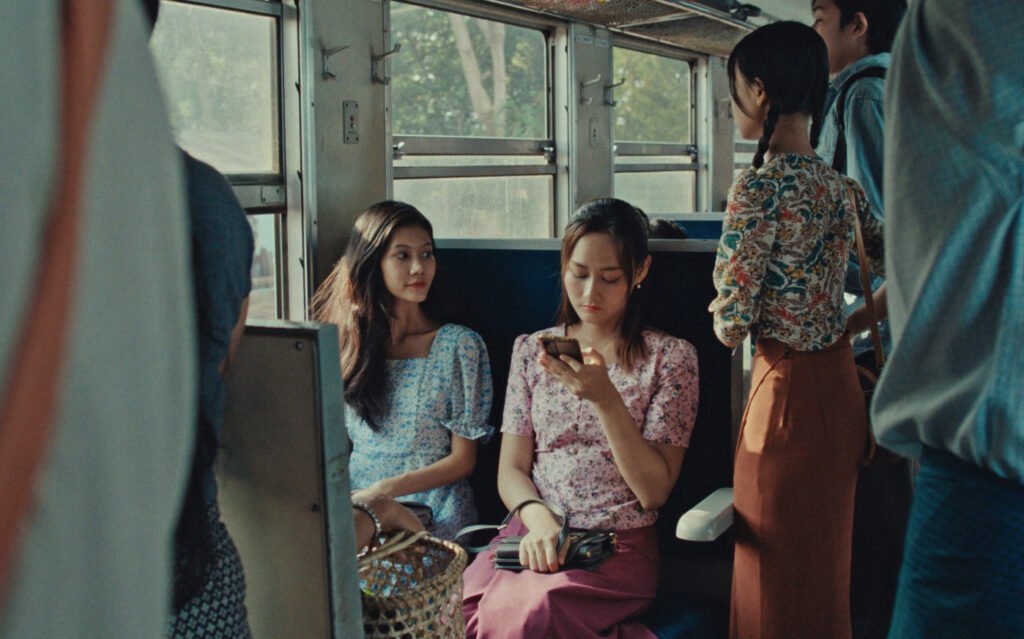
Relying heavily on tracking shots, at a close distance, Thaiddhi’s cinematography is naturalistic but never overly relaxed or with a particularly documentarian energy. The camera stays largely at ground level, save for a couple of shots that look at the women from high above. Everything feels very smooth on film, including its texture, which almost feels as if it would be glossy if one were to touch it. Aung Phyoe teaches us that beneath this gentle veneer is something more vicious at play: a combination of familial trauma, unexpressed desire, class oppression, and an every-man-for-themselves environment. They together force his already vulnerable working-class characters into tight corners, which takes great strength, determination, and—frankly—luck to really get out of.
San Kyi lives with her aging grandmother and her widowed mother, who moved the family from the upcountry for work and treat her very poorly; they also want to marry her off to an older man, Bhone Shwe, whom Theint later uses to get a better job. San Kyi thus develops a depressive-obsessive attitude in the last part of the film, which we can first see in her eyes as she understands how well Theint is able to use those around her to get what she wants. This mood is embodied through the recurring motif of a large snail, which seems to carry the weight of San Kyi’s worries.
Perhaps Theint subconsciously symbolises a freedom and confidence San Kyi longs for. Theint maintains a secret boyfriend, whom she later marries, suddenly. This only triggers San Kyi’s jealousy as she grows increasingly harried by Theint’s refusal to return borrowed money, say where she goes, or inform her of small things in her life. The viewer must thus decide whether San Kyi’s reaction is drastic or called for: is Theint taking advantage of her?
Aung Phyoe jumps ahead chronologically at will, leaving the viewer to fill in the blanks; often, we are also left to interpret how the characters have gotten into each situation. When the decisive onscreen moment comes that transforms how we view the relationship between the two women—a mutual kiss that descends into the beginnings of a sexual encounter—he implicitly asks: what will happen next?
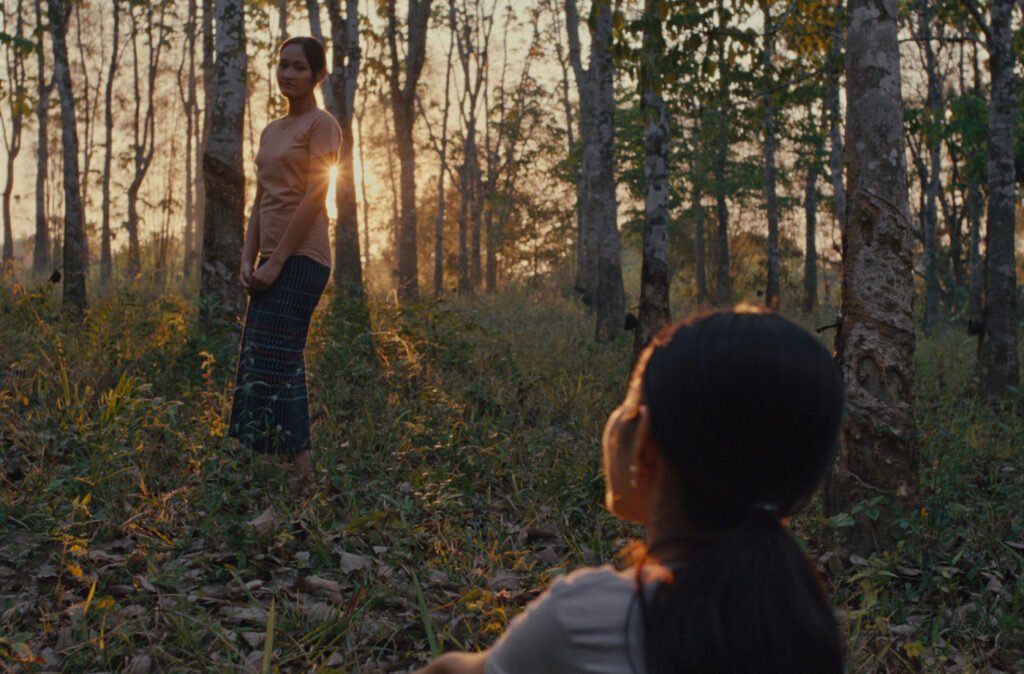
There is, of course, something beautiful about letting this moment linger onscreen for as long as he does. Here, the intimacy is clearly craved by both women and ultimately feels like a deserving follow-on to the ways in which they’ve relied on each other up until that point. The result is naturally something different. Theint asserts her refusal to be anything more than friends they see once in a while, and San Kyi struggles with this decision, as she now openly longs for more. Yet, like her outbursts previously, it comes out like little needles to the flesh, as if unable to bring herself to put forth more of a statement. She is still emotionally suppressed, only able to go through release through a dance sequence near the end of the film, which blends with a more imaginary, fantasy portion.
Aung Phyoe’s reserved directorial style may not please all viewers, or at least viewers who wish more explicit demonstrations of wishes and fears from his characters. Plenty is left up to interpretation, and the story told in an almost “benchmark” chronology of situations sometimes leaves questions, even if the overall arc makes sense. The filmmaker clearly doesn’t engage in any hand-holding, which is perhaps all the more appreciated in a film whose sociocultural context is probably far from most of its first viewers.
*****
Watch the trailer for the film here:


