

From a curatorial perspective, what is your approach to looking at films under an umbrella of queer cinema? Is it more of a filmmaker-driven process, or is it led more by programmers looking to align films with the audience they see?
We definitely take the whole of what the filmmaker submits to us into consideration. Often, folks are submitting a director’s or artistic statement about their work, and that’s something every programmer looks at holistically but differently. It’s sort of like going into a gallery, where sometimes you like to read the wall text first and then look at the piece. Sometimes you just want to go in and form your own take, and then see what the artist’s intention is. It’s a similar approach to curating film for us, too. Ultimately, though, it really is about the work, what it says, and how that speaks to us. We have maybe 13 people on our programming team this year, and so we’re able to all look at different films, get some of the same films, and really come together and have these conversations. Those are really driven by what resonates personally, but I think also the cultural and political context, too. I think a lot of our decisions are born out of those conversations. Something that we then see are audiences responding and chatting with us, or with each other, or with the filmmaker.
Are there any themes that have stood out to you in films you’ve screened in the last few years?
There’s this effort from queer and trans filmmakers to really look at the media that’s shaped us. Jane Schoenbrun’s Teenage Sex and Death at Camp Miasma (read our review here), which is our closing night film, is a big embodiment of this. This one comes to mind, but I think a lot of filmmakers are doing it. The commentary in the film is very clear and upfront. For a lot of us, there have been queer films and also not so queer films that have shaped our perspectives as artists and as humans. They’ve really informed our identity or given us comfort and all these things. Sometimes, they can also be really problematic, and so it’s like, how do you hold these truths together? Maybe there was some terrible representation, but it was all the representation you had at the moment. That film can still be meaningful in some way, but you do have to reckon with that legacy. That film does a lot of things: it’s a slasher and horror film at its core, but it’s also very funny, very meta, and kind of academic. Especially with younger filmmakers growing up having so much access to film and television in a way that a generation before didn’t, we’re seeing filmmakers delve into that meta quality and look at the arc of media in an interesting way. I think that resonates specifically and abundantly with queer filmmakers. Maybe we’re looking a little bit harder at the representation and where we fit.
Given what you’ve said about Frameline stemming from a community movement, and also given Frameline’s place in The Castro [San Francisco district] and so on, what is the festival’s approach to audience and community?
One of the first Frameline screenings I went to was a screening of Bottoms at the Castro [Theatre], and it was a completely sold-out theatre. With a teen sex comedy that was actually kind of queer and written from that perspective, I think that’s a genre where we grew up watching some of these films and you kind of shirk away a little bit—maybe there are some homophobic jokes, whatever there is. To see a film like that in a packed theatre where we all kind of understand each other, and there’s no need to over-explain, it’s just genuinely so funny and such a good time. It was such a raucous audience that will laugh and will talk back. That’s just one of many examples.
Back in the ‘90s, Frameline screened Bound. I have heard that was the film to see at Frameline, because it was similarly at the Castro. It was this riotous debut, and people finally got to see this amazing lesbian film onscreen altogether. We have this legacy of bringing folks together in a room and having that in-person moment where you can really feel free to enjoy queer cinema with people who get it. That’s very important to us programmatically.
We have quite a few retrospective titles in the programme this year, including Bound, Desert Hearts, Macho Dancer, and Cruising. It’s a very wide swath of different films from different genres, and I think that’s partly because we know our audience loves that and has historically loved those particular screenings. There’s something very special about being in San Francisco, particularly at either the Roxie or the Castro or these other iconic venues, where they’ve been partnering with Frameline since the ‘80s. There’s this whole legacy to it, and all these films of the past had these amazing queer premieres and historic moments at these spaces. We’re definitely very much community-minded, and we know that our audience is the reason we’ve been here for 50 years.
*****
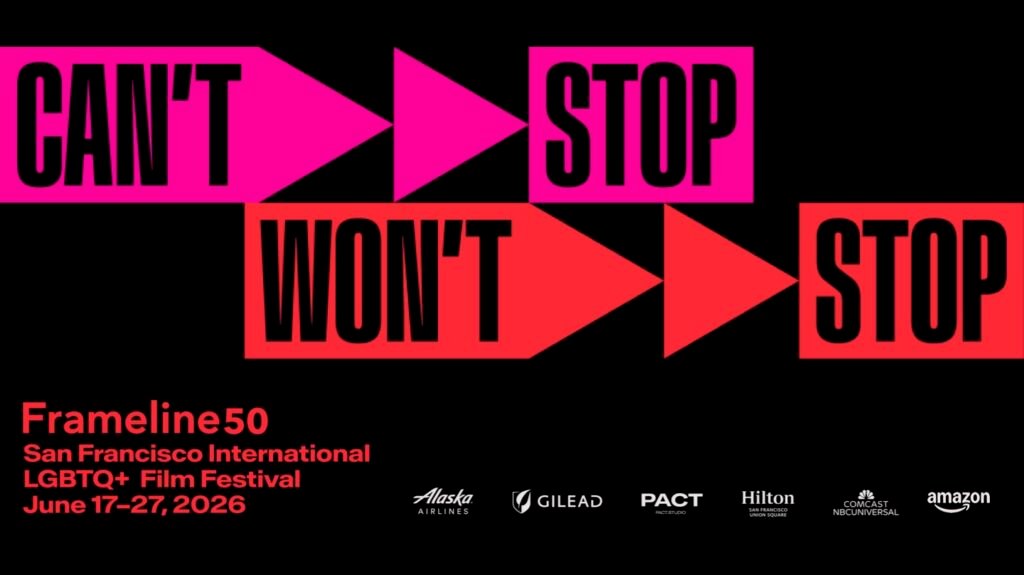
The 50th edition of Frameline: The San Francisco International LGBTQ+ Film Festival runs 17-27 June 2026.


