

For our latest edition of CURATOR TALKS, we had the opportunity to speak with two out of the three co-founders (Katja Wiederspahn, Dagmar Fink, and Gabi Frimberger) of QUEERTACTICS, a queer-feminist film festival held in Vienna since 2019 and now in its seventh edition. The festival’s name is a callback to Barbara Hammer‘s 1974 experimental short, Dyketactics.
In our conversation with Wiederspahn and Fink, we discussed their curatorial approach and processes, taking into account queerness in many cinematic forms, and how the festival’s small size allows the programming team to be precise and decisive in their selection.
*****
Purple Hour: I’d like to start by asking about QUEERTACTICS’ identity as a queer-feminist film festival. As I understand it, it emerged from a desire to be, perhaps, more radical and more resistant to homogenised queer perspectives. However, I’m curious how this designation came about, in your own words, and how it relates to your curatorial approach.
Katja Wiederspahn: We founded the festival after it had become clear that the previous, quite big and well-known, international queer film festival in Vienna [Identities Queer Film Festival Vienna] was ceasing to take place. It was founded and run by [the late] Barbara Reumüller for around two decades. Since it was run by a lesbian woman, it already had quite a unique perspective on queer cinema compared to other queer film festivals at the time.
It featured a lot of works from a female perspective and a focus on female directors. Therefore, there had already been a tradition in Vienna of curating from a more feminist perspective than more general queer film festivals that you see internationally. When the festival ceased to exist, we felt the need to invent something, as there was no other queer festival in Vienna at the time. Gabi Frimberger, Dagmar Fink, and I—the three of us—decided to start QUEERTACTICS at the time.
With reference to Identities, the previous festival, we wanted to do something more. I don’t think we thought about the idea of being radical in the beginning. Instead, we wanted to be more precise in terms of what perspectives were important to us. It was about moving away from the more mainstream-y, usual queer cinema, like coming-of-age films, and toward other forms that are underrepresented and neglected at many festivals. This includes works from countries that are not necessarily considered countries of queer film production. For us, it was a new beginning for thinking about queer-feminist cinema in the 21st century.
Dagmar Fink: We feel that a lot of queer film festivals still feature mostly gay films or queer masculinities, and what matters to us is also to show queer femininities. There aren’t many places where you see a variety of queer feminists in all different shapes and colours. What also matters to us is that our feminism is intersectional and that we have focused not only on Western and European cinema but also on movies from our eastern and southeastern neighbours whenever possible, from different continents—that we don’t only have films representing white people. We also have two films this year, including our opening film, that focus on queers with disabilities.
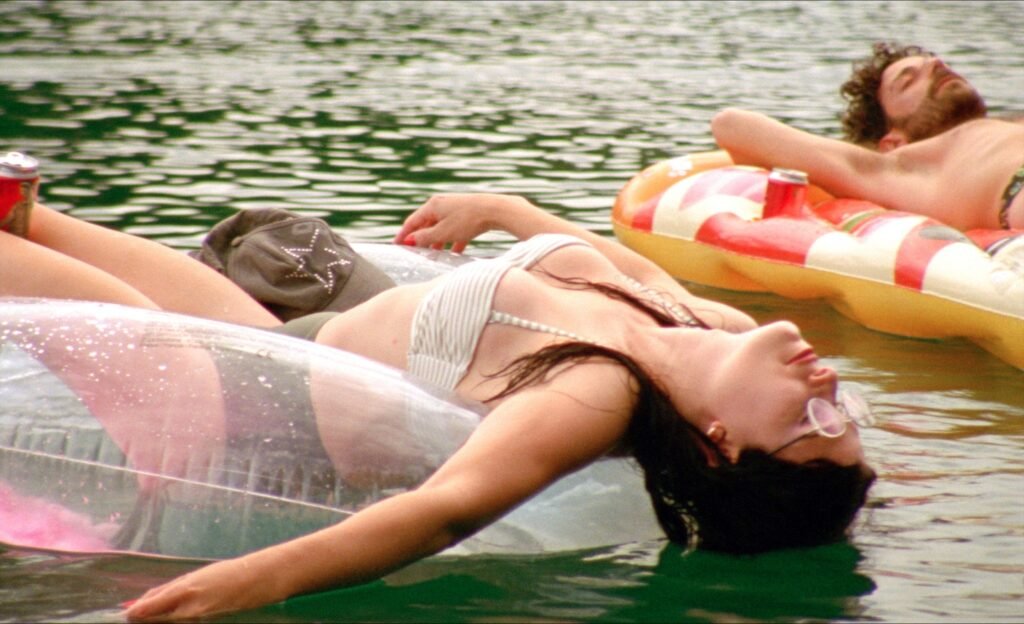 A still from Summer Drift (2026)
This year, you also have a stated emphasis on the trans experience. One of my favourite films of this year is Summer Drift (2026), which you’re screening. We also got to speak with the directors at Cannes.
We unfortunately just learned that the main protagonist [Johanna] will not be able to join us because she needs to work as she has a day job. But we love her and adore her performance.
Do you see your programming as actively responding to, for instance, sociopolitical dynamics in the German-speaking world and across Europe, especially in the context of trans narratives?
KW: It’s a twofold development in our curatorial process. At first, we simply collect film titles that seem interesting to us. Of course, we have a strong focus on trans cinema, anyway. As it turned out this year, we gathered quite a few titles with trans characters, which could be called trans cinema. They’re very interesting and very diverse, touching upon very different subject matters. We also had a discussion about violence against trans people, not only in the German-speaking world but all over the world, especially against trans-feminist people and trans-femme people.
Once we decided to do it, we started a very long discussion about how to frame this focus, because we didn’t want to put this little corner into our programme where audiences will be able to “find” the trans cinema. Rather, we wanted to have it as an overarching part of our programme. That’s how it evolved. However, we were hesitating for quite a while, because we don’t want to ghettoise films in our programme.
What is the process for scouting and selecting films? What does the timeline look like?
KW: I’ll jump in first because I am the one dedicating more time to scouting films, as I am the 24/7 festival worker amongst the three of us. Dagmar and Gabi have other jobs and other identities in their professional lives—I don’t. I used to work for a big film festival in Austria until the end of last year, so I had the opportunity anyway to see a lot of films, go to festivals, and explore programmes. This is still the first way that we identify films that might be interesting. Curiously enough, there are also quite a lot of filmmakers who reach out to us and submit their works to the festival. There are friends, allies, and colleagues who recommend films. There are also sales agents and distributors, like The Film Collaborative, that send us their slate every year. We usually select at least one title they’re handling. The full list of scored titles is very, very long. We had about 350 titles on our list to come up with 16 feature-length programmes in the end.
DF: We’re about five people on our team who watch the films—everyone to the best of their capacity. Katja and I certainly see more films than the others, but that doesn’t mean that we are the only ones pointing out certain films and asking the others to watch them. On this list, everyone comments with their viewing experiences, and then we have meetings to talk about the films, which start sometime in spring. We talk about the films and ask the others to watch them if we’ve seen something that we think is really worthwhile and exciting. If a person on the team completely objects to showing a film, we don’t show the film. Other than that, we want to have at least three from our team who think a film is a really great film and something we want to show.
Is the idea of queering form, genre, and style part of the conversations that you have during this process?
KW: Our discussion about what queer-feminist cinema could possibly mean varies from film to film. It’s not as if we have come up with some kind of definition of what we’re looking for. Do I find this film queer in its aesthetic approach, or is there enough queerness in its aesthetics? I ask myself this question very often, and it is something we discuss a lot, especially this year.
For example, we have a DIY film in our programme called Queer Me (2026) [making its world premiere]. I had quite a hard time imagining it on the big screen because I don’t feel that it was made for this purpose. The filmmaker will be joining us, so I will be able to ask. I felt that it didn’t have a very exciting approach in terms of image-making, but the film is still very convincing in its subject matter. It’s about a queer anarchist squatting story that takes place in Toulouse, and the filmmaker is part of the people who squatted in the house and have been living there for a while. It convinced us because it’s a very important subject for us. There is also the development of the character from start to end—a queer person evolving. That made it queer enough, so to speak, [to fit with our festival].
For each and every film, I could take about what queer aspects convinced us. Very often, we decide against showing a film because we feel it’s very conventional in its form and aesthetics. Maybe there’s a lesbian character and that’s it, but that’s not enough. That’s an approach that we don’t share with a lot of festivals. We are fairly small, which means we can be very decisive in our selection—we don’t need to compromise. Our cinemas are not big, so we really only show films that we feel have to be on the big screen.
DF: It’s always interesting for me to see how differently everyone on our team reads the films. The youngest team member is in their 20s. We are in our 60s, so there’s sometimes a huge difference in how we see a film.
KW: I just thought of Lady Champagne, which is a film I saw first, and then later, I told the others to have a look. I never expected the younger colleagues on our team to love the film so much. It’s a drag film—it’s purely about drag. It’s not about trans identity. I didn’t expect them to be so excited about it, so there are always pleasant surprises.
Screening so many films each year and over the years, have you seen any themes or trends that have really caught your eye over the last few years?
KW: I don’t know if it’s new, but I think it’s quite remarkable that every year there are one or two queer-feminist animated films that are circulating widely. We don’t necessarily show them due to different answers. Last year, there was Lesbian Space Princess (2025) from the Berlinale, which we really wanted to show, but it was bought by a German distributor who doesn’t give us his films, so we couldn’t show it. This year, there’s Tangles (2026). There is a queer-feminist animation scene that’s evolving in features that I appreciate very much.
I tell everybody that I haven’t seen as many films about trans pregnancies as I have this year. It’s the main topic in many films across different countries and with different plots. It’s obviously something that is currently a topic that a lot of people are thinking about, both within and outside the queer community. As for genre, we don’t see that many genre films, so I couldn’t say.
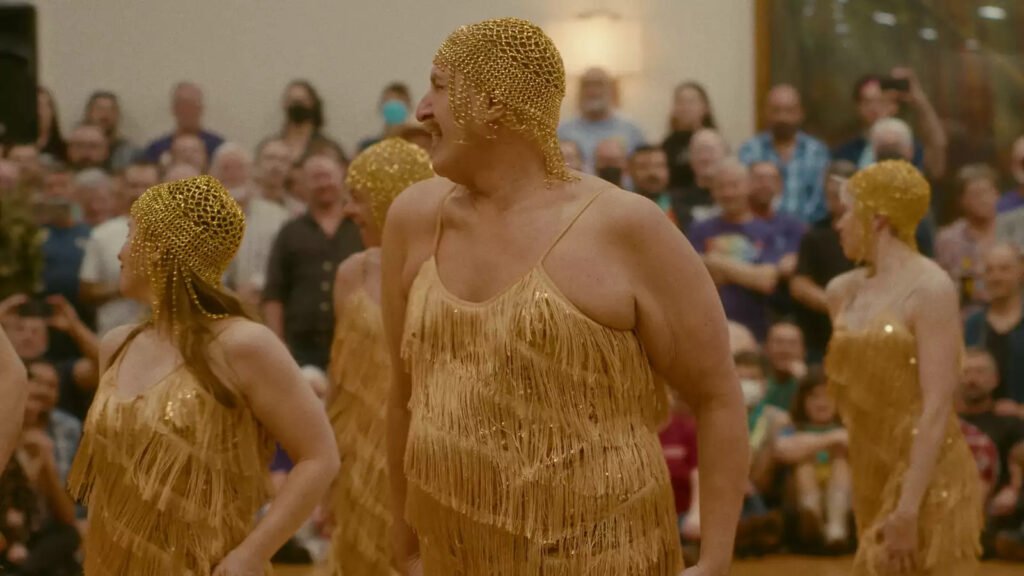 A still from Last Dance at the Sundance Stompede (2026)
What is your approach to audience and engaging with your audience? Do you conceptualise a certain audience while curating?
DF: I would say that our audience is very diverse and differs from programme to programme. Of course, there is a queer audience, but people will come because a film was produced in or filmed in a certain country or because it deals with a certain topic. We invite not only directors or actors as film guests, but we also invite people from the local community to contextualise topics for the Viennese context. We invite people from queer associations in Vienna or NGOs, like AIDS Hilfe Wien [a sexual health support centre], or Queer Base, which support queer refugees. For Queer Me, we have the filmmaker present and also somebody from a punk and squatting context in Vienna. We also want to bring our programme and films to people who may not usually go to the cinema.
KW: To be frank, there are questions: how can we house and welcome people [in an appropriate manner]? As Dagmar mentioned, two films in our programme deal with disability, and the cinema where the festival mostly takes place doesn’t have a wheelchair-accessible restroom. We wish for a lot of people to come, but they can’t. It’s actually very difficult to work with cinemas that are really accessible for everyone. We also have concerns about how to screen films. We do closed-caption screenings, but we don’t have any devices available yet that could contribute to the experience for people who are blind. It’s a process. Accessibility is certainly a big topic for us.
Is there anything about this year’s festival that you’re really looking forward to or find unique about this year’s edition?
KW: For me, it’s that we’re organising a workshop in the context of our festival for the first time. It’s a line-dancing workshop, because we’re showing the documentary, Last Dance at the Sundance Stompede (2026). I’m very curious to see how it will contribute to the mood of the festival and whether it will connect the workshop people with the festival. We always have a festival party, and that’s a great event, but I’m not sure so many people in our audience make up the biggest part of the crowd.
DF: Usually, the festival starts at 10 or 11 in the evening, and this year, it starts at 8 p.m. I hear a lot of people saying, “Oh, thank you! Now I can attend the party!” And although this is not new this year, I also want to mention that we have a short film prize, the Golden Medusa, that we award in three categories for short films produced in Austria: most challenging representation of gender, queerest aesthetics, and best LGBTIQ+ documentary. The award ceremony is our last event, and it’s held in a different cinema—a lot of the filmmakers are present and bring their crowd. That’s always a really great ending for the festival.
*****
QUEERTACTICS runs from 11–15 November 2026 in Vienna, Austria.


