

For our July edition of CURATOR TALKS, we chatted with Sam Ahern, the new festival director at GAZE International LGBTQIA Film Festival in Dublin, Ireland, whose latest edition is on now—from 28 July–3 August.
In our conversation, we had the opportunity to explore how the festival uplifts that link between queer/trans cinema and the Irish filmmaking community, the importance of building strong local relationships, and perhaps even looking at a new Irish Queer Wave.
*****
Purple Hour: Could you start by explaining a bit about how the festival came about and how it’s grown or changed over the years?
Sam Ahern: GAZE was set up originally as the Dublin Lesbian and Gay Film Festival in 1992, before homosexuality was decriminalised in Ireland. It started as a volunteer-led initiative that has, over time, grown into a professional arts organisation from this grassroots initiative. To be around for 34 years is amazing. The festival rebranded as GAZE a while back to be more inclusive. But I also think that “gaze” is such a fun way of encapsulating all of which is one of the most fun queer film festival titles.
I’ve been with the festival since 2024. I joined as the festival manager, and this is my first year as festival director, which is really exciting. I’ve worked in many festivals, but there’s no festival really like GAZE. It’s such a special team, and the board is so supportive. It’s amazing to come to work and be able to work with other queer and trans people who you really respect and who have such a passion for the community—and a passion for queer and trans cinema as well.
The festival has evolved, but it’s tricky with a festival with a small budget like ours and limited resources. Festivals go through a sort of changing of the guard all the time. We’ve had a great team these last couple of years, and I think that has helped the festival go from strength to strength. We’ve seen our time building relationships with community groups here or other festivals, as well as distributors and sales agents. Thankfully, because of the rich history the festival has, they really trust us and trust the relationship that we have built in terms of showcasing quite significant Irish and international queer and trans films.
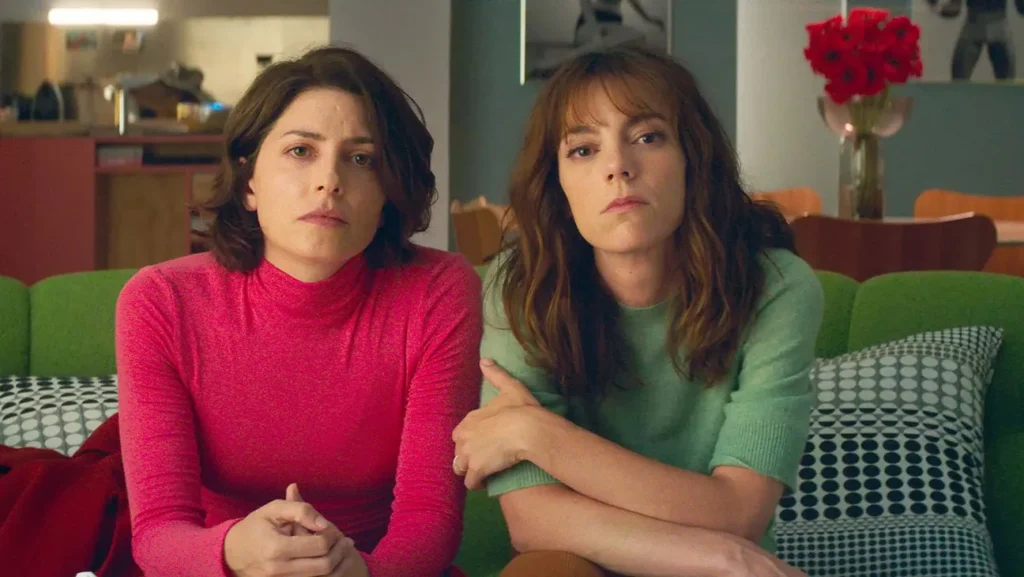 Pedro Almodóvar’s Bitter Christmas
From the festival’s curatorial perspective, how do you approach the umbrella of queer cinema?
We primarily programme explicitly queer and trans cinema, and we always try to have a diversity of experiences. The queer and trans experience is both global and local, and it looks very different from country to country. We have festival submissions on FilmFreeway, and we also look at other film festivals happening around the world to see what films are playing there. The shorts come mostly to us directly, while most of our feature films we discover through our relationships with film distributors, sales agents, and other programmers.
As for me, I’m quite classically trained in the sense that I went to art college, and I studied the auteurs a little bit. Then, I went back to do a master’s in screenwriting, and I think queer cinema was a later discovery for me because I was coming later into my identity. I’ve learned a lot from my colleagues who have worked in it for longer and who have been culturally part of the queer and trans community for longer. When you’re in the industry for so long, you can become a little jaded by seeing the same kinds of stories emerging and not enough diversity.
I also make films myself, I think wonder is a really important part of filmmaking as well. These last couple of years have really helped me to appreciate an approach to DIY cinema. I would say that my perspective is a blend of new appreciation or a discovered appreciation for DIY cinema, grounded in a love for cinema and classic movies.
In your first year as festival director, what are some things that you wanted to bring to the event?
I think it’s important to respond to what filmmakers are saying, and I wanted to be led by what was out there. We found there were a lot of thrillers coming to us through both the features and shorts programmes. We were finding these common themes like surveillance, thrillers, and fantasy, and trying to find a way to be like, “Okay, this is what we see in terms of films that have something unique about them.” We really let that be our guide in terms of composing the programme.
Once we got a grasp of those themes, we packaged the festival. We came up with a way to help audiences navigate the programme through five different strands: Thrill Me, Move Me, Watch Me, Push Me, and Beguile Me. I’m a person who’s always driven by emotion and enthusiasm, and I think it’s a tough time out there right now, especially for the queer community—between the attack at Berlin’s Pride this past weekend, which is really devastating, and the regression of rights that we’re seeing in the UK and US, and in Ireland, too—we have quite a long waitlist for trans healthcare right now. I think the estimates are up to 15+ years, which is crazy.
We need to go to the cinema, arts events, or community spaces to remember that we are human, and that it’s good to feel things—whether it’s sadness, anger, or a sense of rebellion. I hope the strands help people to understand what speaks to them at the moment.
Beyond the themes you mentioned, are there any that you have seen stand out over the last few years in queer cinema?
There’s always a love of horror for queer and trans filmmakers. We also have a genre shorts block called Under My Skin. I think horror is such a good way to find a comparison to all the sort of strange stuff that we’re experiencing as a community but also broadly and globally. It’s so imaginative: you can put allegory into so much horror, and that’s really appealing to LGBTQIA filmmakers.
I do think surveillance is an interesting one as well, because we’re so online. There’s all the good and bad stuff that comes with that: easier access to certain types of education, but also the pressure of constantly being perceived. It can be about people reclaiming their power, or it can be about feeling under threat. It’s interesting to see that mix. And always, with queer cinema, there’s a love of expressing sexuality. There are a lot of sexy, horny films that are really amazing, and that helps us to embrace who we are, comfortably. I think we do intimacy better than anyone else because we’re so celebratory about it, and we’re so conscious of it being important as well.
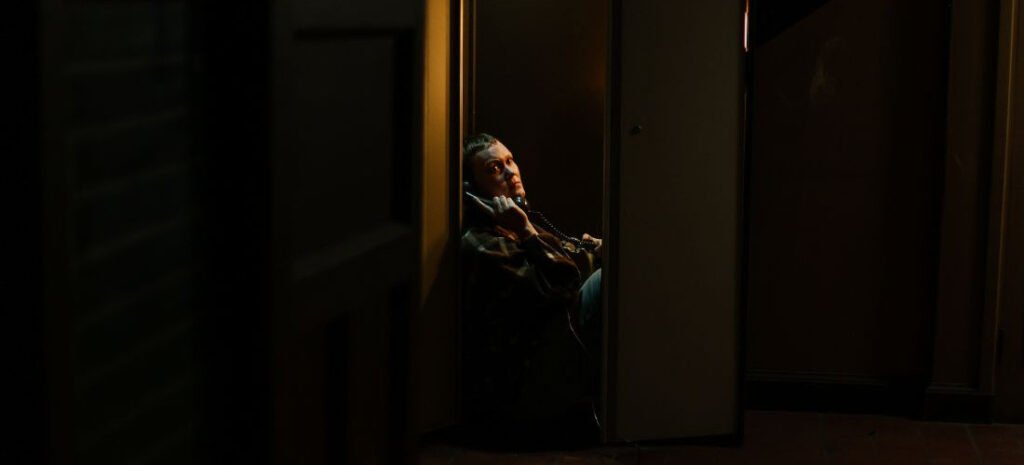 Cara Holmes’ Lesbian Lines
As a writer, director, and producer as well as a programmer, how do you see the connections of these ecosystems, both locally and beyond?
Working in film festivals has massively benefitted me as a filmmaker, and being a filmmaker has massively influenced how I approach programming and producing film festivals. Once you get to see behind the scenes, like how few resources there are at most film festivals, it demystifies the festival circuit to a certain extent. It’s a privilege to be able to see inside that world as a filmmaker. It’s very difficult to release every film and put together a strategy that’s going to work for a film. But locally, it has really helped me to build a community and also connect with filmmakers from other communities. Supporting emerging filmmakers has become a really important part of GAZE for me and my co-chair Evan Horan, who’s on the festival board.
We’re really invested in creating a space for LGBTQIA filmmakers. We’ve done that through our starGAZE professional development initiative. This year, we’ve also consolidated our panels and talks into a one-day event called Café au GAZE. One is a festival markets insights panel; another is about trans filmmakers and creatives. Another is a case study with Cara Holmes on Lesbian Lines, and then we have one called Proposing the New Irish Queer Wave, which we’re really trying to make happen. It’s inspired me to create more spaces for particular communities within the Irish filmmaking scene.
Could you highlight some titles from this year’s programme that stand out to you, for one reason or another?
This year, we’re opening the festival with Bitter Christmas by Pedro Almodóvar, which is amazing—especially for me, as I grew up such a cinema nerd before I really understood my identity. It means a lot to open with a great cinema master. We also have two amazing Irish feature filmmakers in the programme this year: Cara Holmes with Lesbian Lines, which is about the volunteers who set up the Lesbian Line phone service in Ireland in the 1970s, 1980s, 1990s—Cork, Galway, Belfast, so many different locations and having saved thousands of lives. There’s so little queer history documented in Ireland. I think what Cara has done is really remarkable because it’s not just a piece of history. Her love for these women really comes across so beautifully onscreen, and it celebrates them and all the lives that they saved as well.
We also have a very special screening of Kate Dolan’s Soulm8te, which Kate made with Blumhouse-Atomic Monster. Kate is very much a beloved queer director here. Her first feature, You Are Not My Mother, was fantastic. This is her first studio film, but her second feature, which is not queer in subject matter, but because Kate is at the helm, we really wanted to showcase her and show how that sort of campiness and queerness exudes from the film.
At the same time, some of my favourites from the festival programme are also ones that people have not really discovered yet.
*****
Watch the trailer for the festival here:


